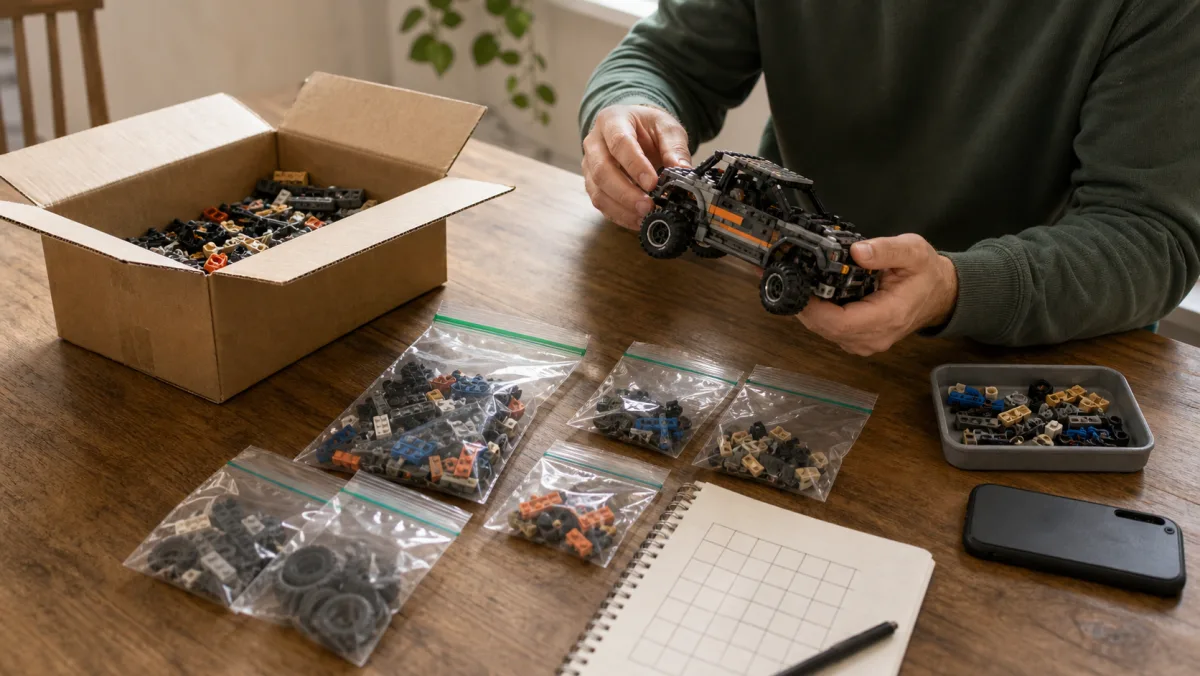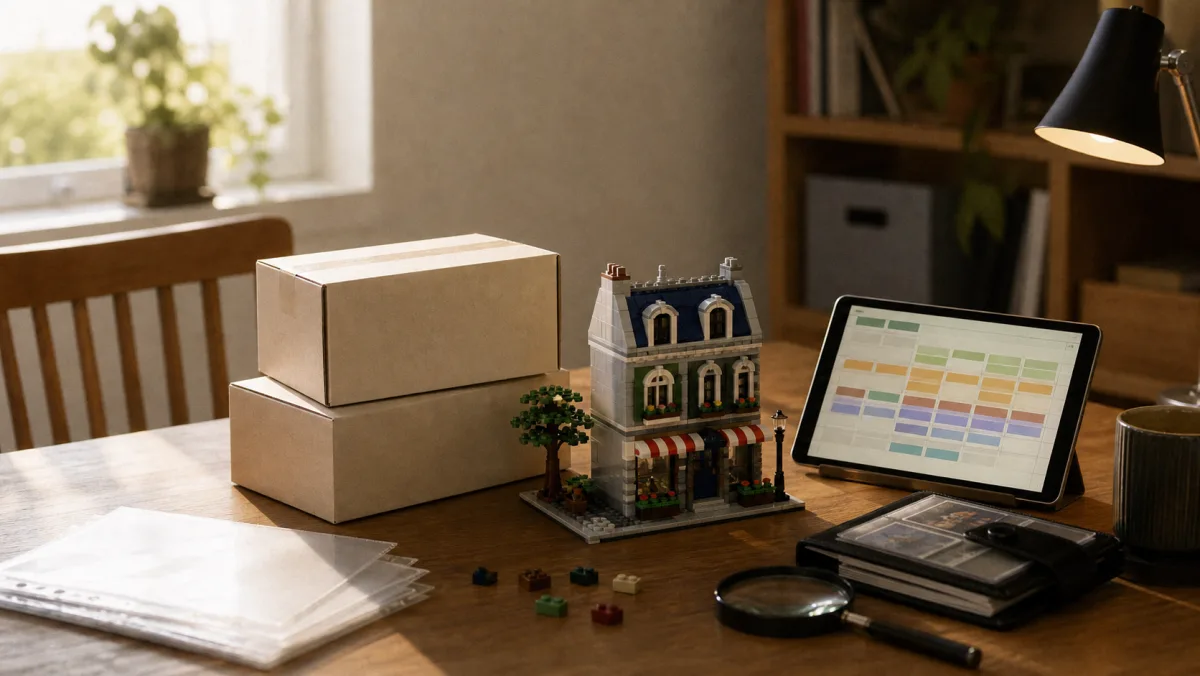
LEGO storage is something everyone thinks about differently until the collection outgrows one bin. Then the real thinking starts. After years of trying, I have a system that works for me, but it’s not the system that works for everyone. This article explains the options, including my own choices and why I made them.
My practical decision rule
Start small enough that you will keep using the system. With LEGO, a method only works if you still use it after three months: sorting, alerts, second-hand checks or saving Insider points. Choose the approach that makes your routine easier, not the one that looks most complete on paper.
| If you have little time | If you want control |
|---|---|
| Choose one fixed place or one fixed alert per set | Track price, stock and condition separately |
| Accept that 80% good is good enough | Decide in advance when you buy or skip |
First: how much do you have?
The right system starts with scale. A collection of 3,000 bricks needs a different approach than 30,000.
| Scale | Approach |
|---|---|
| 0-1,000 bricks | One bin, no sorting needed |
| 1,000-5,000 bricks | 5-10 bins per colour |
| 5,000-15,000 bricks | Colour as first level, specials separate |
| 15,000-50,000 bricks | Hybrid: category first, colour within |
| 50,000+ bricks | By part number (Bricklink category) |
Most hobbyists with 10-20 large sets sit in the 5,000-15,000 range. Colour sorting works fine as a first step there.
Sorting by colour or by shape: my choice
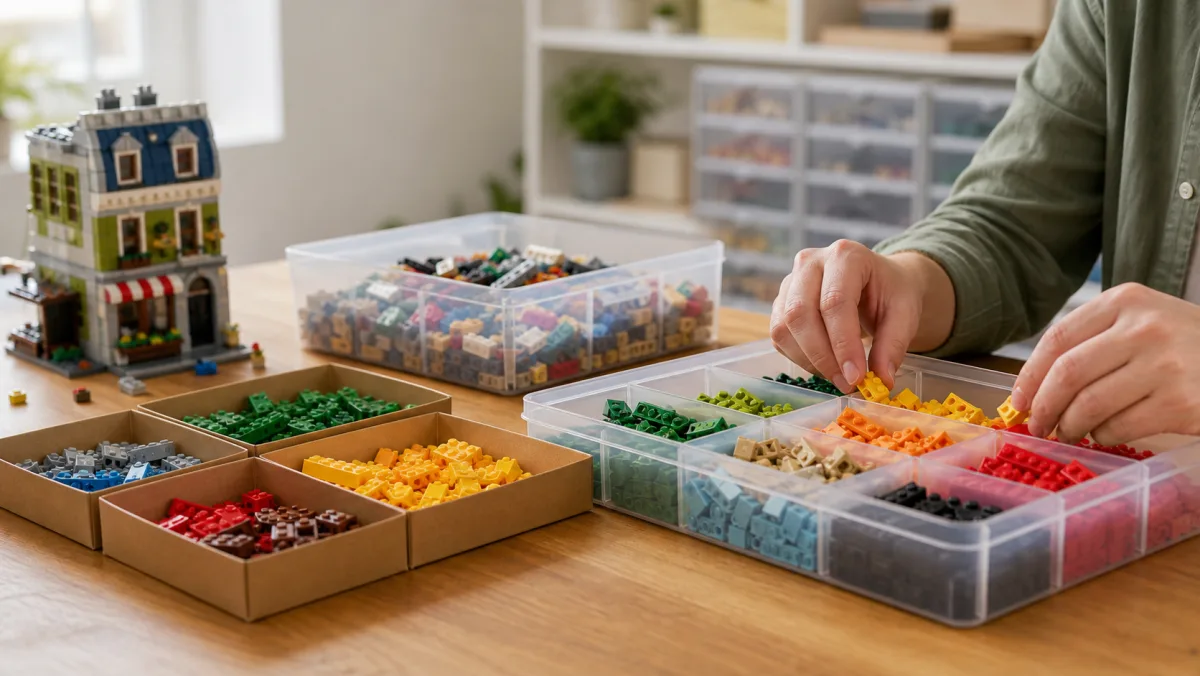
There’s an ideological debate in the LEGO community: colour vs. shape. I sort by colour as the first level, with two exceptions.
Colour works for most people because:
- You search visually. If you need a red 2x4 brick, you look in the red bin, not the “2x4 brick” bin.
- Colour is easier to learn than part nomenclature.
- New bricks can be put away quickly without knowing set categories.
Shape works better if:
- You build MOCs professionally and need specific parts in large quantities.
- Your collection goes above 20,000 bricks: at that point “all red bricks in one bin” becomes too overwhelming.
My compromise: large bulk colours (white, light grey, dark grey, black) sorted by shape. Colourful bricks (red, blue, green, yellow) sorted purely by colour. That gives me the speed of colour sorting for the most-used bricks and the precision of shape sorting for the basics.
Products I actually use
IKEA Trofast is my main system. The 42-litre bin is ideal for large colour categories (all white bricks, all grey bricks). The smaller 9-litre bins handle less-used colours. The KALLAX frame alongside the Trofast rails offers extra display space.
Akro-Mils 10144 (44 small compartments) is what I use for specials: technic pins, clip parts, minifig accessories, 1x1 rounds in all colours. This American sorting cabinet can be ordered online in the Netherlands for around 30-40 euros. It hangs on the wall above my build surface.
Transparent stackable bins of 2-5 litres (own brand from Blokker or Action) for mid-categories that don’t fit Trofast but are too much for an Akro-Mils compartment.
What I don’t use: apothecary drawer units. They look great on YouTube, but the drawers are too small for bulk and too large for fine sorting. After a few months they’re full of a mix you can no longer find your way through.
Instructions: paper or app?
The LEGO Builder app has instructions for nearly all recent sets, free of charge. For those not attached to paper: throw the instructions away and use the app. It works offline once you’ve downloaded the instructions.
I keep paper for sets older than 2015 (not always in the app) and for large sets I regularly rebuild. Storage strategy: A4 binders per theme line, with the set number written on the spine. Larger instruction booklets (Technic, large Icons sets) stored upright in a separate folder.
Boxes: keep or discard?
Three positions, three situations:
Discard: most space-efficient. Acceptable if you’ll never sell the set and value isn’t in the box.
Flattened storage: retains some resale value but visibly used. Good for those who expect to eventually sell but have no space.
Upright in original condition: maximum value preservation. Requires substantial volume: a large set like 75192 has a box of 65x50x35 cm. For anyone viewing LEGO as an investment, this is the only option.
My own choice: I keep boxes for all sets I view as investments or that have retired. The rest goes flat or gets discarded.
Display vs. storage
Sets on a shelf are not storage, that’s display. My strategy per type:
Modular Buildings stay upright on the shelf. Don’t move them unless necessary; connections loosen with repeated handling.
Build figures (Orange Cat, Pua, Iron Man Mark 3) are more sensitive to dust. An IKEA Detolf glass vitrine (around 80 euros) is the standard solution: dust out, visible from three sides.
Star Wars display sets belong somewhere without direct sunlight: UV measurably yellows white plastic over the years.
City and Friends play sets go into my loose-parts storage after 1-2 years. They’re not designed as permanent displays.
When do you actually start sorting?
Only when you have 2,000+ loose bricks. Earlier, sorting is more work than it’s worth. With your first set: sort per bag in the order of the instructions, build it to completion, put the result on a shelf. That’s enough.
Only at your second or third set, when you start mixing or sharing bricks across projects, does a sorting system become worthwhile.
Sets that need sorting
Large boxes where sorting, build space and part management matter before the first bag.

Best for each buyer type
Use these examples to choose storage by build type: display box, parts-heavy build or active play set.
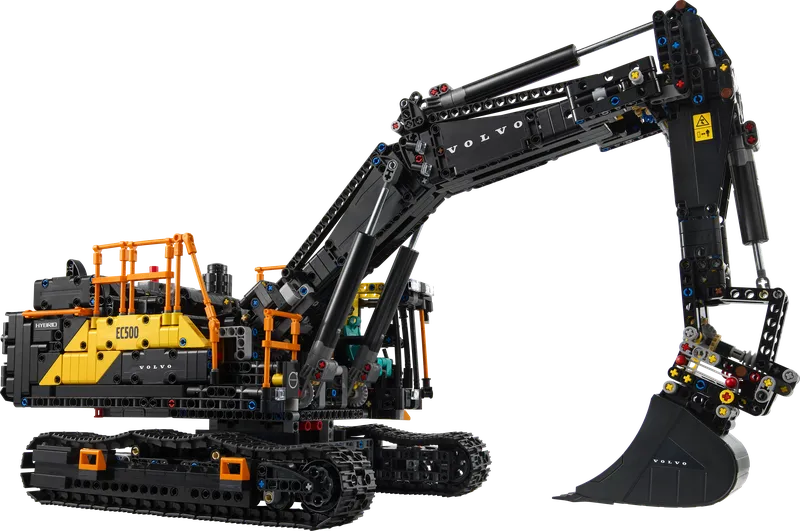
Volvo EC500 Hybrid Excavator is the large-build storage test: decide whether it stays built before buying sorting trays.

Lamborghini Sián FKP 37 is the box-size reminder: a premium set needs dry, stable storage even before it is opened.
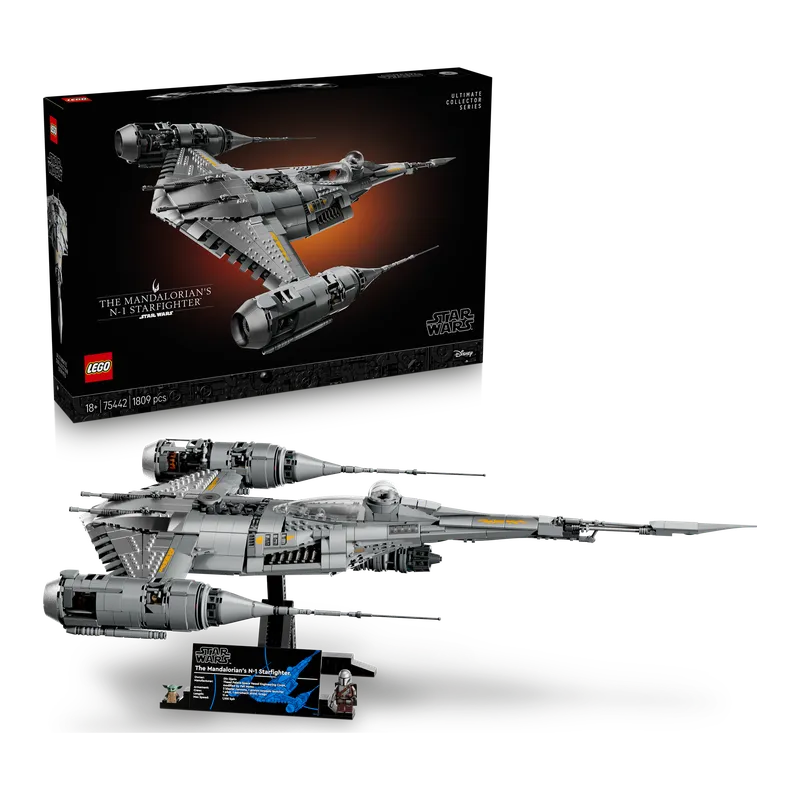
The Mandalorian's N-1 Starfighter should be planned as a display footprint first and a parts-storage problem second.

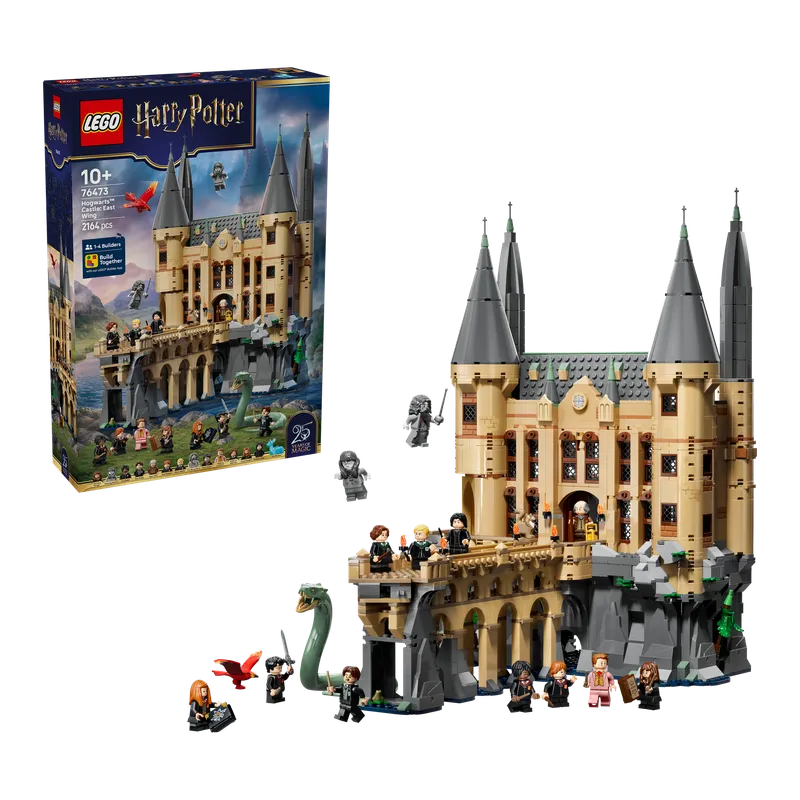
Track Hogwarts Castle: East Wing if storage space is tight; buying later is smarter than stacking boxes you cannot protect.