
LEGO prices feel random at times. A set sits at RRP on Monday, drops twenty percent on Thursday and is more expensive again over the weekend. For buyers it’s more useful to treat that movement not as a one-off discount, but as market behaviour that falls into recognisable patterns.
At BricksDeal we look at three layers: the current lowest price, the historical range and the number of retailers with stock. Only when those three signals point in the same direction do we call a price truly sharp. This analysis describes five patterns you learn to recognise per set, with live Dutch price examples.
That makes this guide useful for anyone following LEGO deals without reacting to every sale label. A good buying decision starts with the question of whether the price deviates from the normal pattern for that specific LEGO set.
RRP is a starting point, not the truth
RRP is useful for comparing sets, but it’s not always the price at which the market normally sells a set. Popular sets stay close to RRP for a long time, while broad releases sometimes settle on a fixed street price quickly.
The most predictable pattern is what we call the premium decline curve: a set with a high RRP starts near that RRP and drops along a recognisable curve to eventually 30-40% off in years 4-8. There are small fluctuations along the way, but the overall direction stays downward.
71043 UCS Hogwarts Castle is a classic premium decline case: eight years on sale, an RRP of € 469.99 but consistently sold closer to € 397.70. The curve is predictable. On retirement (expected in 2026 or 2027) a final drop to 40-45% off likely follows, then a scarcity premium on the secondary market.
For buyers: a set above RRP in years 1-3 is likely scarce, while a set still near RRP in year 5 or later is an exception that points to limited distribution or a recent revision.
Stock determines the pressure
Not RRP but stock determines whether a price becomes sharp. A set available at five retailers gets price pressure when one retailer overstocks. A set at two retailers gets no price pressure but scarcity risk instead.
At BricksDeal we compare the number of retailers with live stock as a signal before we call a price interesting. Three or more retailers with stock: room for downward movement. One or two retailers: buy fast if the price is good, because the next price move is usually up.
In practice this means: don’t set your price alert threshold based on RRP alone. Also check the stock trend on the BricksDeal set detail page. The same price with declining stock means something very different from that price with rising stock.
Seasonal patterns are useful but not sacred
Some LEGO categories have a fixed seasonal rhythm. Botanicals peaks around Mother’s Day (May), Valentine’s Day (February) and the Christmas period. Speed Champions drops after the Dutch Grand Prix at Zandvoort (end of August). Architecture skylines move least seasonally but follow the general Q4 discount pattern.
Worth knowing: prices often drop before the peak day, not after. Retailers want to clear stock in anticipation of the sale moment. A Valentine pink bouquet is cheaper in January than on February 13, because retailers want to sell at full margin to last-minute buyers on Valentine’s Day itself.
For 10328 Bouquet of Roses (currently € 39.95): in January a price below that is realistic. On February 12-13 it often sits back near RRP because retailers want to catch Valentine demand at full margin.
Replacement pressure: when a 2026 version drives down the old price
A lesser-known pattern: as soon as LEGO releases a 2026 version of an existing model (same subject, new box), the old version drops faster than without competition. Retailers want to make room for the new SKU and actively put the old one on sale.
Take the Dobby example. 76421 Dobby the House-Elf sat steadily around its RRP between 2023 and late 2025. Since 76469 Dobby the Free Elf appeared in January 2026, 76421 dropped to € 37.99 within three months. The new 76469 already sits below the old version in price, proof that retailers accelerate the transition.
Comparable cases:
- 76424 Flying Ford Anglia loses ground to the newer 76470 Enchanted Flying Ford Anglia
- 10280 Flower Bouquet (original 2021) was revised in 2026, so the old box disappears first
- 21044 Paris gets subtle competition from 21064 Paris – City of Love
For the old versions: if you want it, buy now. On retirement the secondary-market premium is limited because the identical character or subject is still for sale as a new set.
Parallel grid pricing: collecting series move in sync
For sets from the same collecting series (Speed Champions F1 grid, Architecture skylines, Helmet Collection) they move almost synchronously. Identical RRP, comparable production volumes, and retailers treat them as one bundle.
The 2024 Speed Champions F1 grid is a textbook example: all ten team cars share the same RRP and move within the same band. Outliers differ by only 1-2 euros based on fandom: Verstappen (77243) and McLaren champion (77251) draw slightly more retailer pressure. Williams (77249) and Sauber (77247) are slightly cheaper because fewer buyers want them individually.
What this means for you: if you want to collect the full grid, don’t buy one team at a time while waiting for a general sale day. The price difference between the most expensive and cheapest team is only a couple of euros, and that wait rarely beats just buying the pair that’s already cheaper.
Price floor: when a set stops moving
Sets that have sat around the same minimum for years have reached a “price floor”. Further decline is unlikely because the margin for retailer and LEGO Group would then drop below workable levels. Setting price alerts below the floor rarely yields anything.
Three typical price floor cases:
- 21034 London (€ 28.99 against an RRP of € 39.99): nine years on sale, stuck around this level for two years. A further drop only comes at retirement or under stock suppression.
- 76934 Ferrari F40 (€ 19.99 against an RRP of € 26.99): Speed Champions with an already low RRP and little room. Black Friday adds a euro or two at most.
- 10311 Orchid (€ 31.99 against an RRP of € 49.99): four years on sale, settled in the same band for a long time. Replacement expected within a year.
For sets on their floor: don’t wait for further decline. If the current price fits your budget, buy directly. Waiting for sharper discount more often leads to retirement than to a sharper price.
The best buying moments are usually not the loudest
Marketing peak moments (Black Friday, Star Wars Day, LEGO Insiders sales) are visible but not always the sharpest. The best prices often appear at quiet moments:
- Early February (after Sinterklaas leftover but before Valentine’s)
- Late April (before Mother’s Day demand)
- Early September (after holidays, before pre-Black-Friday price hikes)
- Second week of January (Christmas overstock liquidation)
At these moments we often see deeper discounts on specific sets than on the loud sale days. Reason: retailers try to gauge stock or move overstock without the marketing pressure of Black Friday.
For Botanicals and smaller Speed Champions: these quiet moments are often sharper than Black Friday itself.
How to recognise a real price drop
For every “sale” on LEGO sets, four checks apply:
- Compare with the price two weeks earlier. A price that was raised in the run-up to make the discount look bigger doesn’t count as a real drop.
- Check RRP versus the “was” price. Some retailers use an inflated “was” price above RRP. Always compare with official RRP.
- Look at the lowest price over the past 30 days. A BF sale exactly equal to the lowest price in late October is no extra drop.
- Check stock at multiple retailers. A good price at one retailer while three others are still at RRP can be a temporary error that gets corrected quickly.
On BricksDeal’s set detail page you’ll find the past 90 days of price movement and the minimum price across all tracked retailers. Use that for a quick check before you buy.
Why this works well for evergreen articles
The five patterns above change little over time. The specific sets in the examples switch each year, but the market behaviour (premium decline, seasonal cycle, replacement pressure, parallel grid, price floor) remains consistent because it follows from retailer logic and LEGO Group’s production patterns.
That keeps this analysis useful as a reference across all buying guides we publish. In the LEGO Architecture, Harry Potter, Star Wars, Botanicals, F1 and Black Friday guides we refer back to these patterns for the specific price logic per set.
Method and sources
We track LEGO sets at least twice a day at eight Dutch retailers: Amazon.nl, Bol.com, LEGO.com, Wehkamp, Coolblue, Intertoys, MisterBricks and GoodBricks. The maximum age of a price on BricksDeal is twelve hours; after that it is refetched.
Piece count, release year and set data come from Brickset and Rebrickable, with LEGO.com as the primary RRP source. We always compare against the official RRP, not the highest retailer price of the moment.
For seasonal and retirement context we combine age, stock trend and LEGO Group’s known production patterns. No forecasts, no retirement data from LEGO itself - that’s rarely published in advance.
Affiliate links are labelled as such. We don’t accept paid placement; retailers cannot buy their ranking. This analysis was updated on April 30, 2026 by Frank Spin.
For live price alerts go to LEGO price alerts. For current deals: LEGO deals.
71043 UCS Hogwarts Castle
A 6,020-piece set that's been on sale eight years at the same RRP but now sells around € 397.70. A classic premium decline curve.
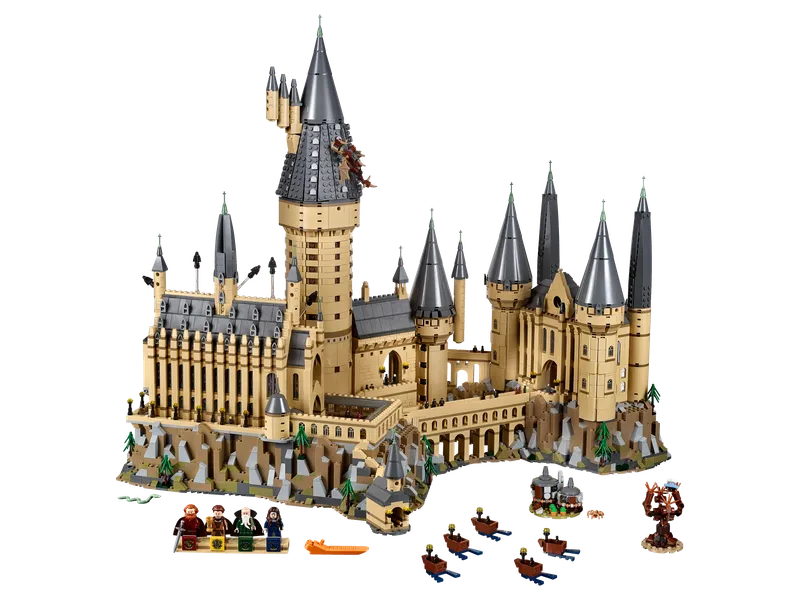
RRP € 469.99 (2018), now € 397.70 (−15%). Premium licence sets almost always follow this curve: about six months near RRP, then a gradual decline to 30-40% off.
Three seasonal Botanicals with predictable drop pattern
Botanicals often drop just before peak day, because retailers want to clear stock ahead of the sale moment.

Classic Valentine's and Mother's Day bouquet. Drops 3-4 weeks before peak day, rebounds the week after. Currently € 39.95; sharpest just before Valentine's and on Black Friday.


Red Christmas star with a narrow sales window (October-December). Outside that window there's almost no stock; inside it, the price moves within a tight band.

Dutch tulip set (2026). Expect peak demand in April (tulip season) and the sharpest price right before it, the typical Botanicals pattern.

76421 → 76469: same Dobby, different price
When LEGO releases a 2026 version of the same character, the old box drops faster than without competition.
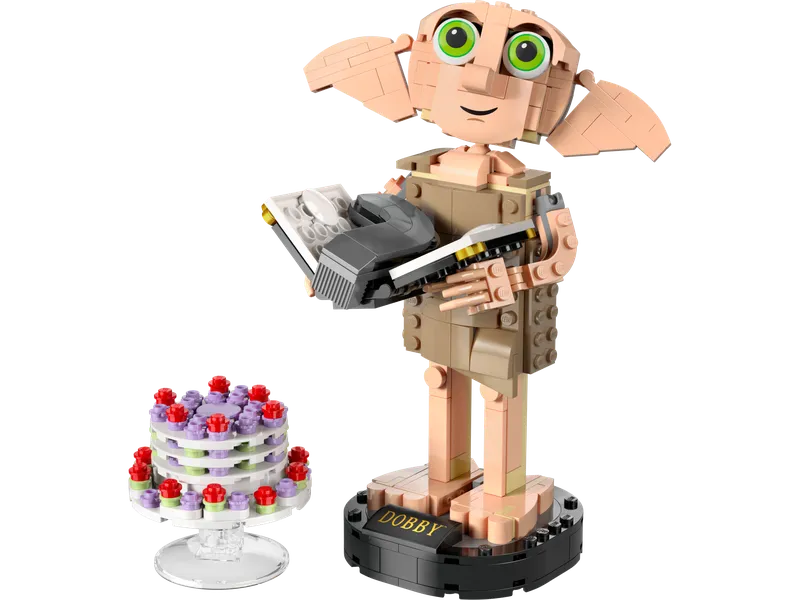
Now € 37.99 (at RRP). Since 76469 appeared in 2026, the price drops faster than it did between 2023 and 2025. Expect retirement within 12 months.

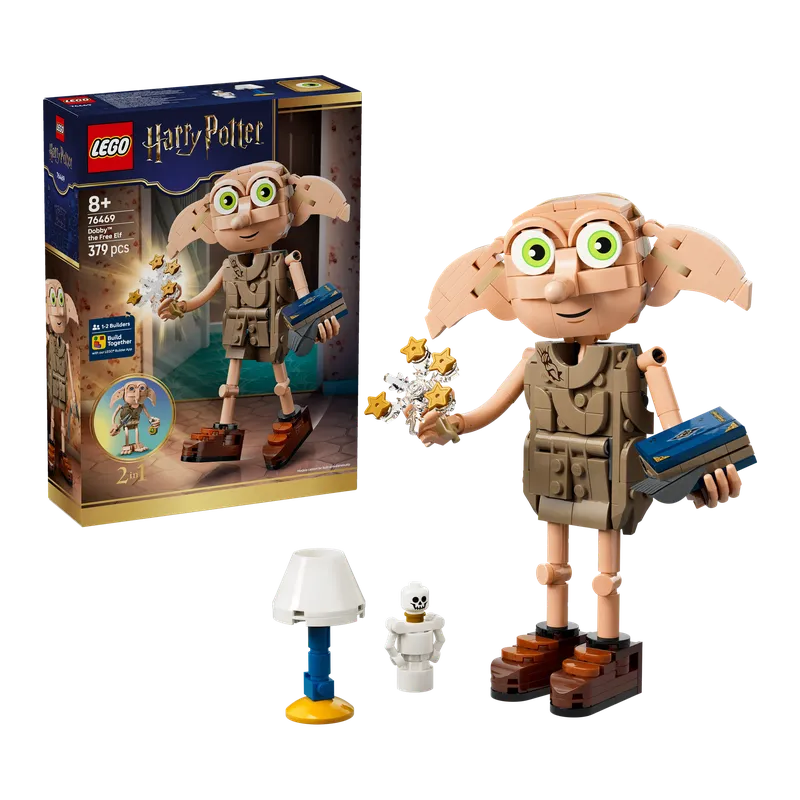
Now € 22.99 (−34%). The new version has only one year of price decline behind it but already sits below the old variant, proof that retailers accelerate the transition.

Four F1 Speed Champions teams, identical ceiling
Sets from the same collecting series move almost synchronously - identical RRP, comparable stock, parallel discount at Dutch retailers.

Now € 19.99 (−26%). Part of the full ten-team grid, where every team car moves within the same band.


Now € 16.99 (−37%). Sharpest in the whole grid; Verstappen's popularity creates slightly more retailer pressure than the other teams.
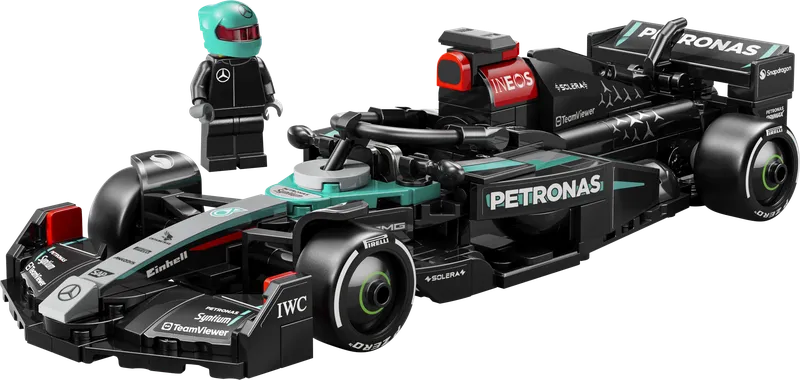
Now € 16.99 (−37%). Hamilton's last Mercedes season; closely follows Red Bull RB20 in price movement.


Now € 18.00 (−33%). 2024 constructors champion; on average slightly pricier than Red Bull because McLaren fans buy more.

Three sets at or near their floor
Sets that have sat around the same minimum for years - price alerts below that level rarely deliver.

Now € 28.99 (−28%). Nine years on sale and stuck around this level for two years, a price floor with little movement.


Now € 19.99 (−26%). Speed Champions with an already low RRP and little room for further decline. Black Friday adds a euro or two at most.

Now € 31.99 (−36%). Four years on sale and long settled at its floor. Replacement expected within a year.