Every attic with a box of old LEGO raises the same question: is anything in here worth money? For the loose bricks the answer is usually no. A basic brick from 1995 is identical to the one in the shop today, and identical means interchangeable. The figures are a different story. A minifigure is printed for one set and rarely returns afterwards, and exactly that scarcity makes some figures sought after. Even the Dutch national media have discovered the subject by now, right down to the loose helmets. The nuance that belongs with it: most figures bring in very little. The exceptions are the story, and this guide explains how to recognise them.
Want to check what you own right away? BricksDeal has a searchable database of close to 14,000 LEGO minifigures. Look up your figure by name or theme and instantly see which sets it appeared in. Hunting for a figure-packed set yourself? Set a free price alert and get notified the moment a retailer drops the price.
Why the figures, of all things, drive a set’s value
LEGO produces bricks in gigantic quantities and reuses the same moulds for decades on end. Anyone missing a brick will find it again tomorrow, new or second-hand. Minifigures work exactly the other way round: the print on a torso, the face on a head and the combination of parts belong to one set or one short run of sets. Once that set goes out of production, the supply of that figure stops, for good.
That is why the second-hand market shows a pattern that surprises newcomers: sellers take sets apart because the figures bring in more separately than the box does complete. The bricks of a big licensed set are replaceable, the characters are not. It is no coincidence that many boxes in our list of the most expensive LEGO sets carry big licence names: a substantial part of what collectors are after sits in the figures you cannot get anywhere else.
This applies most strongly to licensed themes. A Star Wars character, a Hogwarts student or a Marvel hero only exists in the version LEGO once made for that one set. Demand for the character continues, the supply never grows again. For in-house themes like City the effect is much weaker: the figures look alike, appeared in large production runs and are largely interchangeable.
Five things that make a minifigure valuable
1. Rarity. The hardest factor. Figures that were only handed out at conventions, figures from gift-with-purchase sets you got with a minimum spend, and figures that appeared in exactly one set are scarce by definition. The smaller the original production run, the fewer copies survive in good condition decades later.
2. Licence combined with retirement. A well-loved character from a set that is out of production combines lasting demand with frozen supply. This is the category the occasional news stories come from. Which sets are about to leave the shelves is covered in when does a LEGO set retire.
3. Condition. Collectors judge a figure the way a coin dealer judges a coin. Print wear, yellowed white or light grey parts, bite marks and loose, floppy arms push the value down immediately. The same figure in top condition can be worth a multiple of a well-played copy.
4. Completeness. The right helmet, the original cape, the matching weapon or accessory: without those parts a figure is not finished. Figures assembled from parts out of different sets, known among collectors as frankenfigs, do not count as original. The flip side is that loose old helmets and accessories have demand of their own, from collectors completing a figure.
5. Supply and demand. In the end the market decides. A technically rare figure of a character nobody knows will sit unsold. A common figure of an iconic character stays affordable. The combination of small supply and a large fan base is what makes a figure genuinely sought after, and you can read it from how often a figure is listed and how quickly it disappears again.
How to check what your figures are worth
Work through a box of attic figures in five steps:
- Sort by recognisability first. Licensed figures out: everything with a Star Wars helmet, a Hogwarts cape or a superhero suit. Then the striking older figures, such as spacemen, knights and pirates from the eighties and nineties. What remains, the generic townsfolk, is almost always the least interesting pile.
- Look up each candidate in the BricksDeal minifigure database. Search by character name or browse by theme. For every figure you see which sets it appeared in; a single, long-retired set is the signal to keep digging.
- Mind the variant. The same character often exists in dozens of versions, and the differences sit in the details: the face print, the type of helmet, the colour of hands or legs. Exactly those details decide whether your copy is the common or the sought-after version.
- Look at what actually gets paid. On BrickLink you can see what figures have really sold for alongside the asking prices; on Marktplaats you mostly see what sellers are hoping for. The gap between the two is regularly large, so base your expectations on completed sales.
- Be realistic about the rest. Figures from large production runs keep getting listed and therefore stay cheap. Those are best sold as a job lot rather than one by one, or simply kept for the next generation of builders.
Where do people sell loose minifigures?
Two venues dominate the trade. Marktplaats is the standard Dutch route: low-effort, no international shipping hassle, and suitable for job lots, complete sets and common figures. The downside is an audience that mostly hunts bargains and haggles hard.
BrickLink is the international collector market. Every figure has its own catalogue number, condition descriptions are the norm and the buyers know exactly what they are looking for. For a rare figure this is almost always where it finds the right buyer, in exchange for more work: a seller account, decent photos, international shipping options and some patience.
Practical notes: loose figures fit through the letterbox as small parcels, which keeps shipping simple. And count your time honestly. Listing one rare figure properly is an evening’s work; selling thirty common figures one by one is a part-time job that costs more than it pays. If you are buying figures or sets second-hand yourself, read our tips for buying second-hand LEGO first.
Condition and storage: how to hold on to value
- Keep them out of sunlight. UV light yellows white and light grey parts beyond repair. A windowsill full of figures is value destruction in slow motion.
- Dry and stable. Damp garages and attics with big temperature swings are bad for plastic, prints and accessories.
- Keep figure and accessories together. A zip bag per figure prevents the one helmet that makes the difference from vanishing into a bin of parts.
- Capes flat, not folded. Fabric parts develop permanent creases and tear along the edges.
- No aggressive cleaning. Lukewarm water and a soft brush are the maximum; cleaning agents and firm scrubbing wear away precisely the print the value sits in.
The reverse route: buying sets packed with minifigures
The same logic works for buyers. Anyone buying a set today implicitly pays a price per figure, and that differs enormously per box. A minifigure-rich set spreads the set price across many figures, and historically it is exactly the figures that remain most sought after once a set retires.
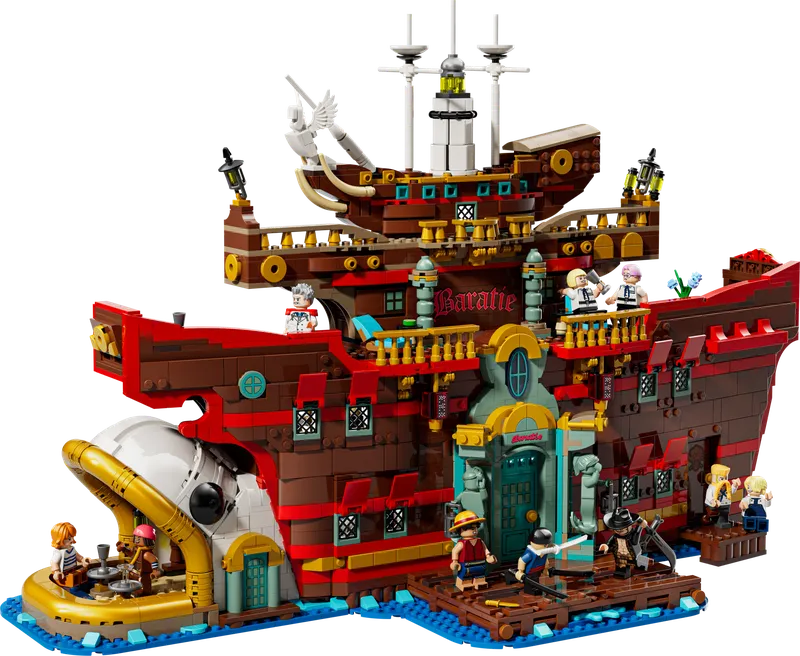
A current example: The Baratie Floating Restaurant (75640) from the One Piece theme delivers twelve minifigures in one box and currently costs € 228,84. Looking ahead: Garp’s Marine Battleship (75646), with eight figures, is available for pre-order and ships from 1 August 2026, currently at € 128,69. For both, the figures are exclusive to these sets, the pattern that carried the value in earlier licensed themes.
Which active sets contain the most figures is something we worked out separately in LEGO sets with the most minifigures, including the trade-offs per category. To understand what happens to set prices after retirement, read LEGO retired sets and their value. And for anyone looking through an investor’s lens, LEGO as investment has the sober numbers: even with plenty of figures in the box, this remains a hobby with uncertain returns, not a pension plan.
Current discounts on sets across all themes are listed in our deals overview; there you can also see at a glance how many figures each set contains.
Look it up first, decide afterwards
The summary of this entire guide fits in two sentences. Most old figures are worth little, but the exceptions are real and recognisable by five factors: rarity, licence plus retirement, condition, completeness and the balance between supply and demand. And you do not have to guess: look up your figure in the minifigure database, see which sets it appeared in, and only then decide whether selling, keeping or completing is the best move. If you are hunting a minifigure-rich set yourself, a free price alert is the relaxed way to wait for the right moment to buy.
Active sets packed with minifigures
Three sets from this guide where the figures make up a large share of the box, with live price comparison across Dutch retailers.