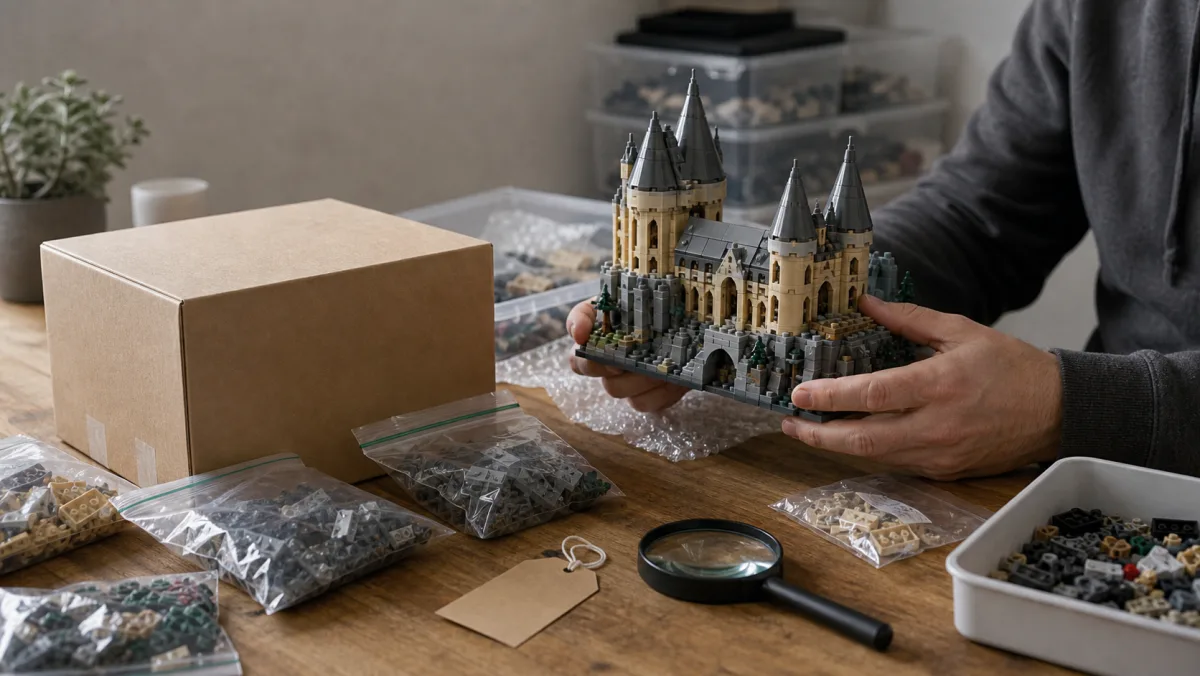
Between 250 and 400 LEGO sets retire every year. After that, you hear almost everywhere that the second-hand price shoots up. It doesn’t. Most retired sets hover around RRP or slip slightly; only a small category appreciates structurally, and that category is smaller than the LEGO investment crowd makes out.
Want to know which sets are retiring soon? See LEGO sets retiring in 2026.
One caveat first. The figures below come from public second-hand platforms: asking prices and, where available, sold listings on Bricklink and local marketplaces. That is not an audited price index, and those prices move. Read the percentages as direction, not as a guarantee — this is a snapshot from mid-2026.
The myth versus the numbers
Ask yourself one question: how many sets from 2018 can you name that now fetch 2x RRP on second-hand marketplaces? Probably two or three. More than 300 sets retired that year.
Here is roughly how the median development across all retired sets of the last ten years looks:
| Period after retirement | Median rise above RRP |
|---|---|
| 1 year | 0-15% |
| 3 years | 15-40% |
| 5 years | 30-80% |
| 10 years | 50-200% |
These are medians, not promises. A handful of outliers — Cafe Corner, the first UCS Millennium Falcon — pull the average up and produce the stories that keep circulating on forums. Most sets still sit within 0 to 100 percent above RRP even after ten years, and a fair share don’t even reach that. So don’t count on the outlier; count on the median.
What “retired” means in practice
Once LEGO stops production, a set disappears in stages:
- LEGO announces retirement, usually 3 to 6 months ahead.
- LEGO.com sells the last stock, sometimes at a price drop.
- Other retailers follow with a run-off of weeks to months.
- After that, the set is only available second-hand via Bricklink or local marketplaces.
Only in that last stage does anything like a value above RRP appear, and only if demand outstrips the remaining supply. For most sets, it simply doesn’t.
Which sets do rise?
Four categories perform above the rest again and again. What they share: there is no direct successor for the same model, and there is a fanbase that still wants the set years later.
The early Modular Buildings are the best-documented example. 10182 Cafe Corner (2007), 10185 Green Grocer (2008) and 10190 Market Street (2007) have traded well above RRP sealed for years. The reason is a mix of small print runs, a fervent city-building community and the fact that LEGO never reissued those exact models.
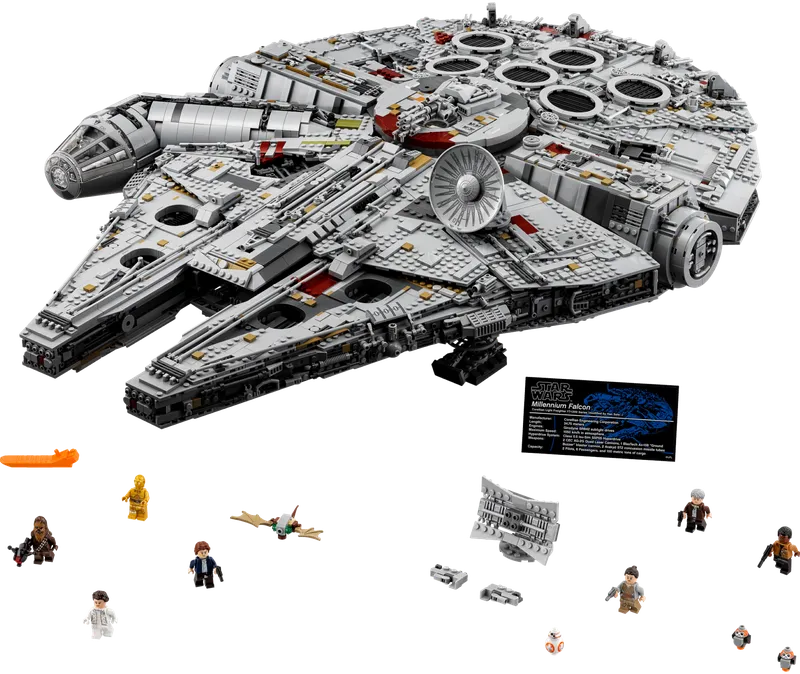
The early UCS Star Wars sets show the same thing. 10221 Super Star Destroyer (retired 2016) is asked at around three to four times RRP sealed; the original 10179 Millennium Falcon UCS (2007) sits higher still. Note the word asked: those are asking prices on Bricklink, not necessarily what actually changes hands.
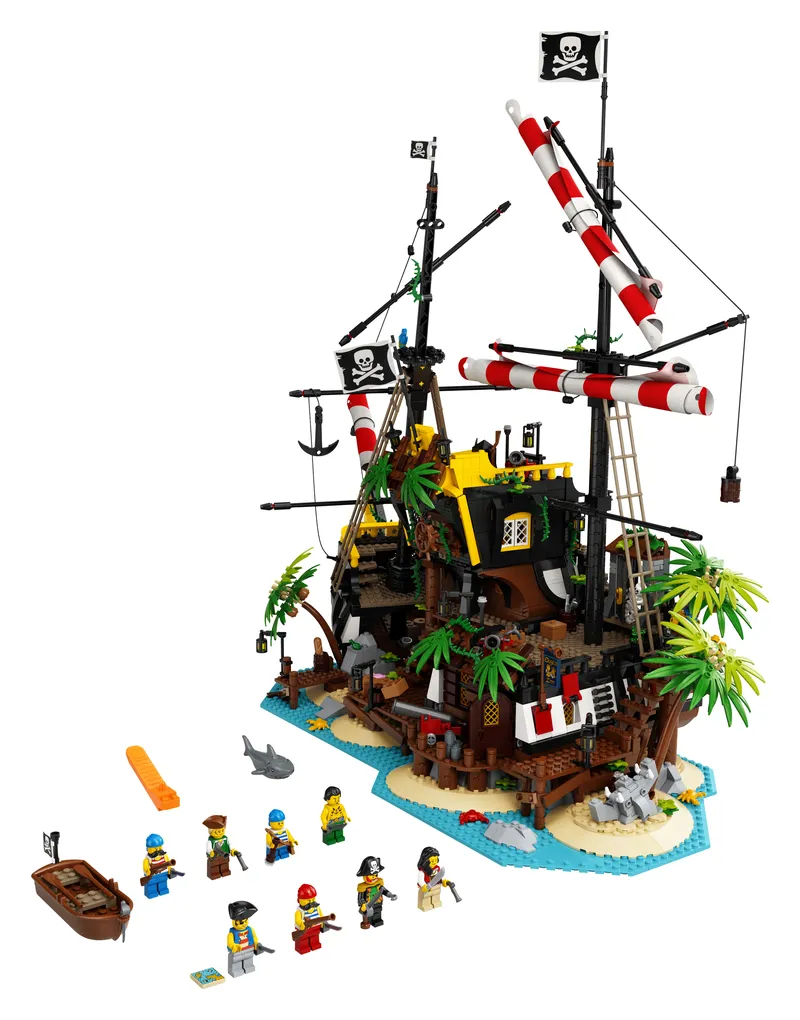
LEGO Ideas with a specific niche is the third group. 21322 Pirates of Barracuda Bay is already above RRP, as is 21321 Stranger Things The Upside Down. Ideas sets come with a built-in fan community outside the regular LEGO buyer, and that group keeps looking after retirement too.
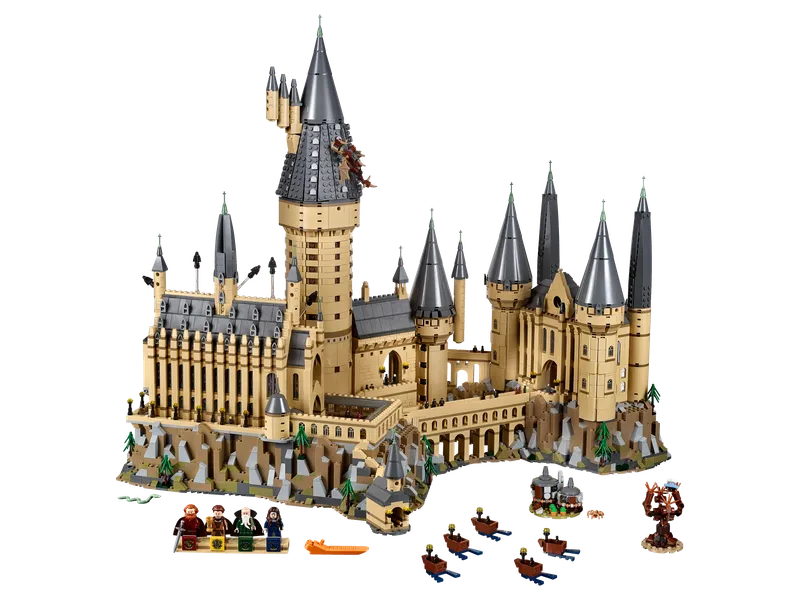
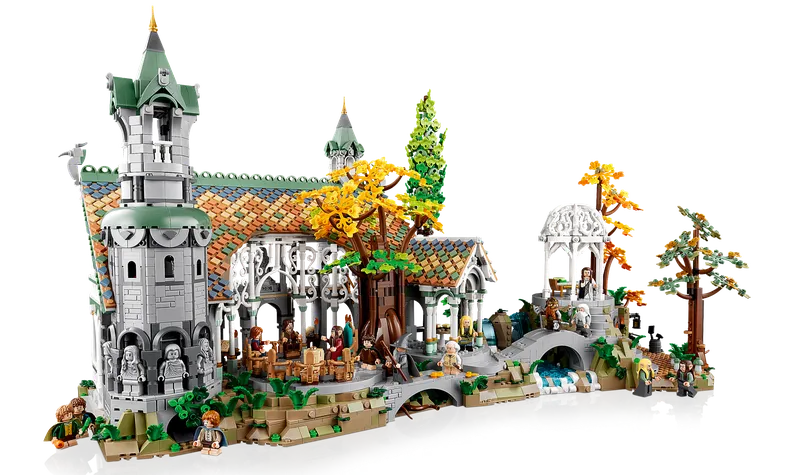
The fourth group is the licensed exclusives from Harry Potter and Lord of the Rings. 71043 Hogwarts Castle (2018) has held longer than expected, and 10316 Rivendell (2023) is a candidate once it retires — though the market for LotR is narrower than for Harry Potter.
Which sets do not rise?
This is the part most people skip, and it is where the honest story sits. City and Friends retire and get replaced by a near-identical successor; demand for the old version is minimal. Duplo almost never rises. Speed Champions can pick up slightly, but rarely above 30 to 40 percent. Sets where LEGO lost the licence often fall instead, because the fanbase stops growing. And once a newer version of the same model concept exists, the older one stays flat.
Have a box in the attic and hoping for a windfall? First check whether a newer version of that same concept has come out. If it has, your chance of appreciation is small, however nice the set otherwise is.
Current sets with a real chance after retirement
Based on those same patterns — and stressing that they are patterns, not guarantees — three active sets stand out.
The 75192 UCS Millennium Falcon has now been in production for nearly nine years, has no announced successor and a huge fanbase. That is the classic recipe, and a retirement within one to two years would surprise nobody. It is not certain, though: LEGO can keep the set going for years, and nine years of production also means many copies are in circulation.
For 71043 Hogwarts Castle (2018) the picture is more mixed. The Harry Potter fanbase remains large, but LEGO has since released a newer Hogwarts at smaller scale. That dampens demand for the big model, and with it the chance of a sharp jump.
10316 Rivendell (2023) leans on a small but loyal LotR community. The chance of appreciation is there, but narrower than for Harry Potter. Expect patience and no certainty.
When is keeping a set sealed actually smart?
Keeping a set to sell is not the same as building or collecting. Treat the analysis above as a brake on impulse buying, not as a spreadsheet rule every set has to win. Before you shelve something sealed, three questions really matter: are you buying it to build, to gift or to keep boxed; is the price below the normal market price or only below RRP; and which other set are you not buying if you buy this one?
Put briefly, keeping a set sealed is only a real strategy for a large UCS, an early Modular or a LEGO Ideas with a strong niche — and no direct successor. For City, Friends or a set with an announced successor, a lower price does not change the value pattern.
Practical notes on keeping sets sealed
If you do keep them, storage matters. A box with dents or sticker marks quickly loses 30 to 50 percent of value compared to a pristine copy. Cool, dry and out of the sun is not a luxury; UV damage to the box puts a hard cap on the price.
And selling takes more effort than the forum stories suggest: taking photos, answering questions, shipping safely, sometimes a return. Dealers and Bricklink shops usually buy sealed sets for 50 to 60 percent of the current market price, precisely because they take that work off your hands. Factor that into what you think you will keep.
In short
Buy LEGO to build or collect, not primarily as an investment. If you still want to bet specifically on appreciation, focus on large Star Wars UCS sets, early Modular Buildings or LEGO Ideas with a strong niche fanbase, buy at or just below RRP, store them perfectly and plan on five to ten years of patience.
Compare active sets most quickly via the LEGO Star Wars page or the LEGO Harry Potter page. And not sure whether a set is heading for retirement? Our guide on when a LEGO set retires explains the signals.
Sets from this article
The LEGO sets discussed in this article, with live price comparison.

Best for each buyer type
The sets from this article that illustrate the patterns most sharply in practice — from LEGO Ideas to UCS Star Wars.
LEGO Ideas with a built-in niche fanbase — already above RRP after retirement and the clearest illustration of the pattern.

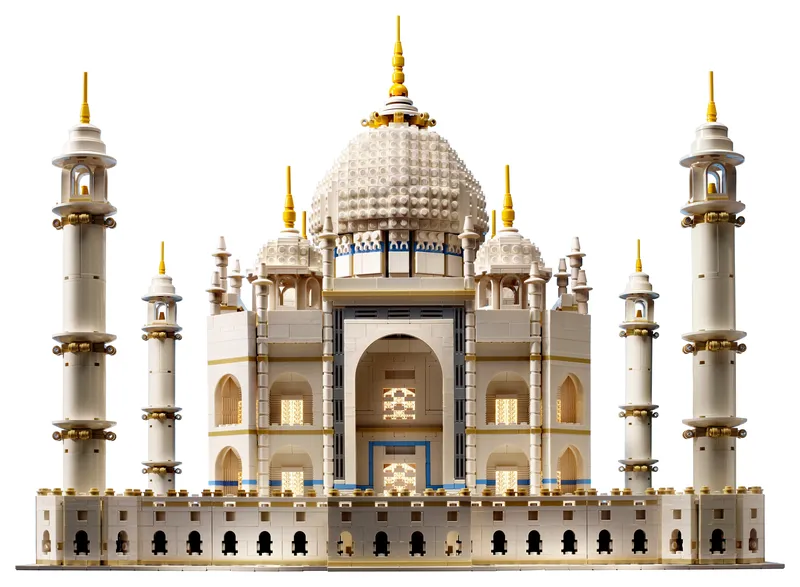
Architectural icon that is widely recognisable outside the LEGO community — easier to justify as a gift than a UCS Star Wars or an Ideas niche.

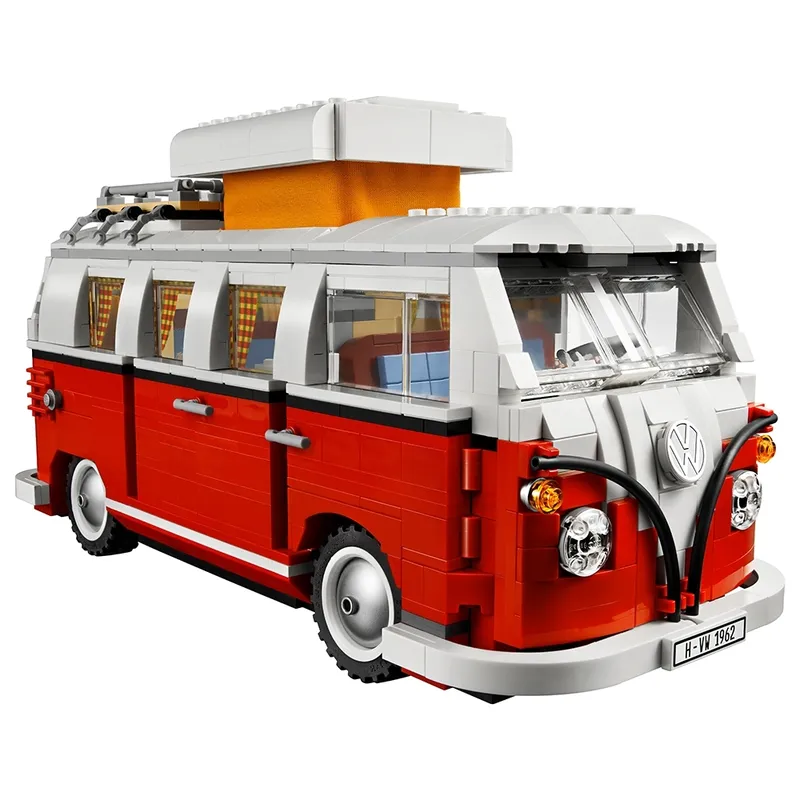
Compact car set that reads as a display object even outside the LEGO context — sits well on a shelf for years without explanation.

Nearly 9 years in production with no successor announced — the set where a retirement signal justifies immediate action.