
Between 250 and 400 LEGO sets retire every year. LEGO doesn’t announce this with press releases or emails: most sets disappear quietly from the catalogue. But those who know what to look for can see it coming months in advance.
This article explains how LEGO retirement works, which signals are reliable and which aren’t, and what you concretely do as a buyer when a set you want is approaching its end. For the full list of current 2026 retirements: LEGO sets retiring 2026.
How to use this analysis for an actual purchase
Treat the analysis as a brake on impulse buying, not as a spreadsheet rule every set has to win. A LEGO set can look expensive rationally and still be the right buy because the theme, build experience or display value fits. The reverse is also true: a sharp price can still be a bad buy if you did not really want the set.
| Check | Good question |
|---|---|
| Price | Is this lower than the normal market price, or only lower than RRP? |
| Use | Are you building it, gifting it, or keeping it sealed? |
| Alternative | Which set are you not buying if you buy this one? |
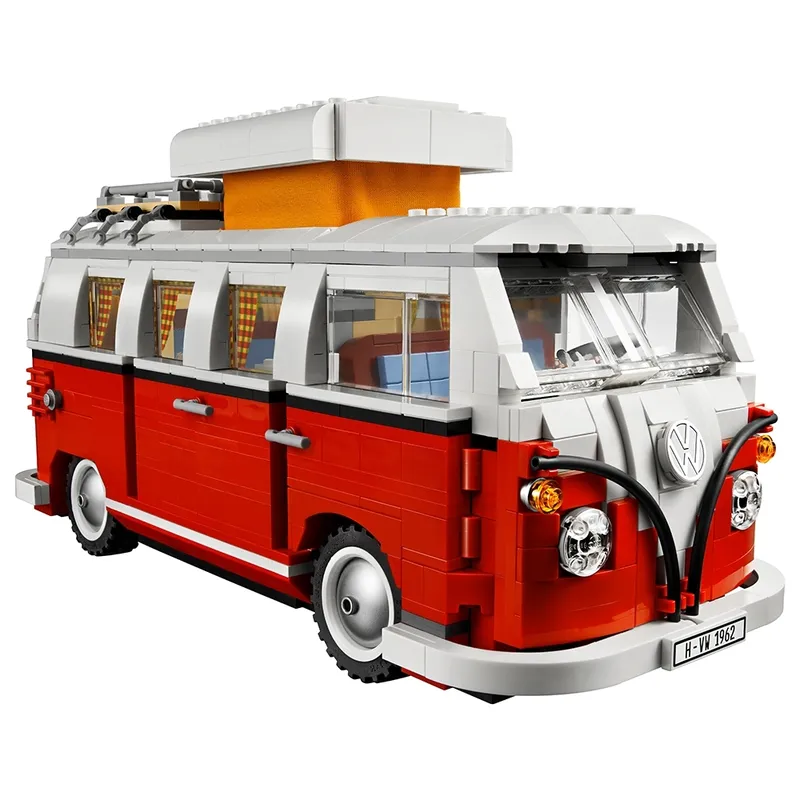
From the sets in this guide, I would track 75192 Millennium Falcon and 10220 Volkswagen T1 Camper Van first. Not because those are automatically the best deals, but because a price move on a larger or more giftable set changes the buying decision fastest.
How long does a set typically stay active?
| Category | Average lifecycle |
|---|---|
| City sets | 12-18 months |
| Friends sets | 12-18 months |
| Ninjago | 12-18 months |
| Botanicals | 1-2 years |
| Star Wars licence | 18-24 months |
| Marvel licence | 18-24 months |
| LEGO Ideas | 2-3 years |
| Technic flagships | 2-3 years |
| Architecture skylines | 3-4 years |
| Duplo basic | 2-4 years |
| Premium 18+ flagships | 2-4 years |
| Modular Buildings | 3-5 years |
Two exceptions that prove the rule: the 75192 UCS Millennium Falcon has been active since 2017: nine years in May 2026, well above the average for Star Wars sets. The 10220 VW T1 Camper Van ran more than ten years in production before its final retirement. Those are exceptions, not expectations.
The five signals that work
1. “Retiring Soon” label on LEGO.com
The most reliable signal. LEGO places this label typically 3-6 months before the retirement date. Not every retiring set gets this label in time, but when it’s there, the chance of retirement within that year is near certain.
Check a set directly on LEGO.com, not via a comparison site. Labels aren’t always passed through.
2. No restock at multiple retailers simultaneously
When Amazon.nl, Bol.com and LEGO.com simultaneously show a set as “temporarily out of stock” without restock within 6-8 weeks, that’s an alarm signal. Retailers run down their stock when they know the production stop is in sight.
One retailer sold out is normal. Three simultaneously, for months, is a pattern.
3. Announcement of a successor
LEGO regularly releases updated versions of popular vehicles and buildings. When a new AT-AT or a new Hogwarts Castle is announced, the old version typically retires within 6-12 months. This is the most predictable pattern.
4. Permanent price drop above 10 percent at LEGO.com itself
LEGO.com normally enforces RRP strictly. Outside fixed promo periods (Black Friday, Double VIP), LEGO.com sells at RRP. When a specific set sits structurally above a 10 percent price drop at LEGO.com itself, not at an external retailer, that is a strong sign they want to work through remaining stock.
5. Set disappears from regular catalogue but appears in bundle promotions
Sets offered only as “exclusive with purchase of X” or as GWP (Gift With Purchase) are often a sign that LEGO is trying to work through remaining stock cleverly. Not always a sign of imminent retirement, but in combination with other signals it’s relevant.
What is NOT reliable
- Rumours on Reddit or Brickset without confirmation: speculation, not evidence.
- High second-hand prices: those say something about the market, not about LEGO’s retirement planning.
- Low stock at one retailer: normal fluctuating inventory management.
How LEGO retirement works internally
Based on public information and retailer behaviour:
| Timeline | What happens |
|---|---|
| 12-6 months before retirement | LEGO decides internally; retailers not officially informed |
| 6-3 months before retirement | Final production run; retailer orders no longer replenished |
| 3-1 month before retirement | “Retiring Soon” label appears on LEGO.com |
| Retirement date | Set disappears from LEGO.com; remaining retailer stock sold through |
| 6-12 months after retirement | Bol.com and Amazon.nl sometimes still sell residual stock |
The retirement date at LEGO.com is not automatically the date you can no longer buy the set anywhere. But the price on second-hand platforms starts rising from the retirement date.
Three scenarios for buyers
You definitely want the set. Buy at the first official signal: the “Retiring Soon” label on LEGO.com, or when three or more retailers simultaneously have no restock. Waiting for a deeper price drop almost never pays here: by then the set is already scarce.
You’re not sure whether you want the set. Calculate the risk. Is the set three years or older and you’ve only just realised you want it? You have at most six months to decide before the retirement risk becomes truly urgent. After retirement you’ll quickly pay 40-80 percent more via Bricklink.
You’re buying for investment. The best purchase is before the “Retiring Soon” label, not after. Once the label is there, everyone knows and the cheapest copies are already gone.
What not to do
Don’t wait for a “deepest price drop” on a set with retirement risk. Many sets disappear at RRP: they never get cheaper through official channels. The price drop comes second-hand, but by then you’ve already missed the RRP window.
Don’t rely on Bol.com as a “plan B” after retirement. Bol.com sometimes sells through residual stock, but not guaranteed and not for long.
Sets discussed in this analysis
Concrete examples of LEGO sets with long and short lifecycles.

Best for each buyer type
Use these examples to separate real retirement pressure from normal stock noise.
Millennium Falcon is the retirement watch example: age, stock breadth and price movement all need to line up.

Volkswagen T1 Camper Van is a reminder that familiar retired sets become expensive fast once normal retailer stock is gone.