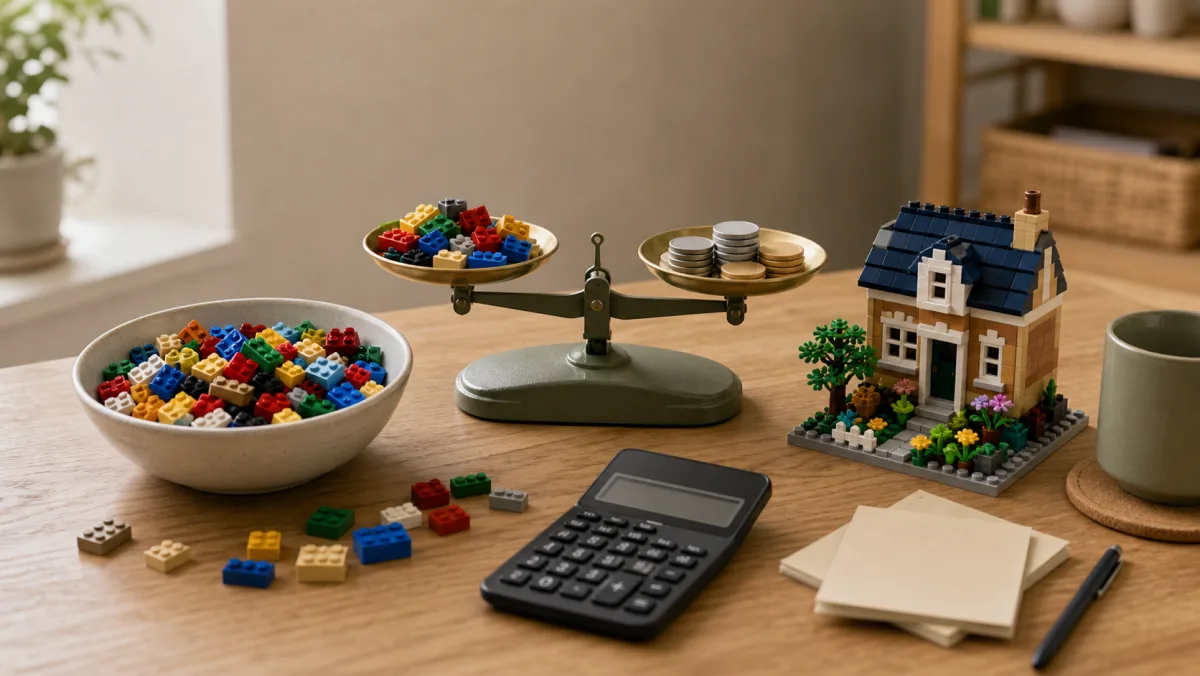
Price per piece, the most widely used rule of thumb in the LEGO community, is simple: divide the price by the piece count, check whether the ratio looks favourable, done. For part of your purchases that works. For Technic sets, licensed sets with many minifigs, and build sculptures it does not. The whole skill is knowing when to use the ratio and when to ignore it.
The average in the Netherlands in 2026 sits between 10 and 12 cents per piece at RRP. But that average hides enormous variation.
How to use this analysis for an actual purchase
Treat the analysis as a brake on impulse buying, not as a spreadsheet rule every set has to win. A LEGO set can look expensive rationally and still be the right buy because the theme, build experience or display value fits. The reverse is also true: a sharp price can still be a bad buy if you did not really want the set.
| Check | Good question |
|---|---|
| Price | Is this lower than the normal market price, or only lower than RRP? |
| Use | Are you building it, gifting it, or keeping it sealed? |
| Alternative | Which set are you not buying if you buy this one? |
From the sets in this guide, I would track 71799 NINJAGO City Markets, 10307 Eiffel tower and 71043 Hogwarts Castle first. Not because those are automatically the best deals, but because a price move on a larger or more giftable set changes the buying decision fastest.
What the average conceals
| Category | Price per piece (RRP) |
|---|---|
| Modular Buildings and NINJAGO City | 6-8 cents |
| Large Icons and Castle sets | 7-9 cents |
| Star Wars mid-range | 9-13 cents |
| Marvel and DC licensed sets | 10-15 cents |
| Technic mid-range | 10-14 cents |
| Technic flagships (Liebherr) | 18-24 cents |
| Brick Headz and small licensed sets | 12-20 cents |
The cheapest segment is not necessarily the most interesting to build, and the most expensive per piece is not necessarily poor value for its category.
Sets with the lowest ratio
Current leaders on price-per-piece among active sets:
| Set | Pieces | RRP | €/piece |
|---|---|---|---|
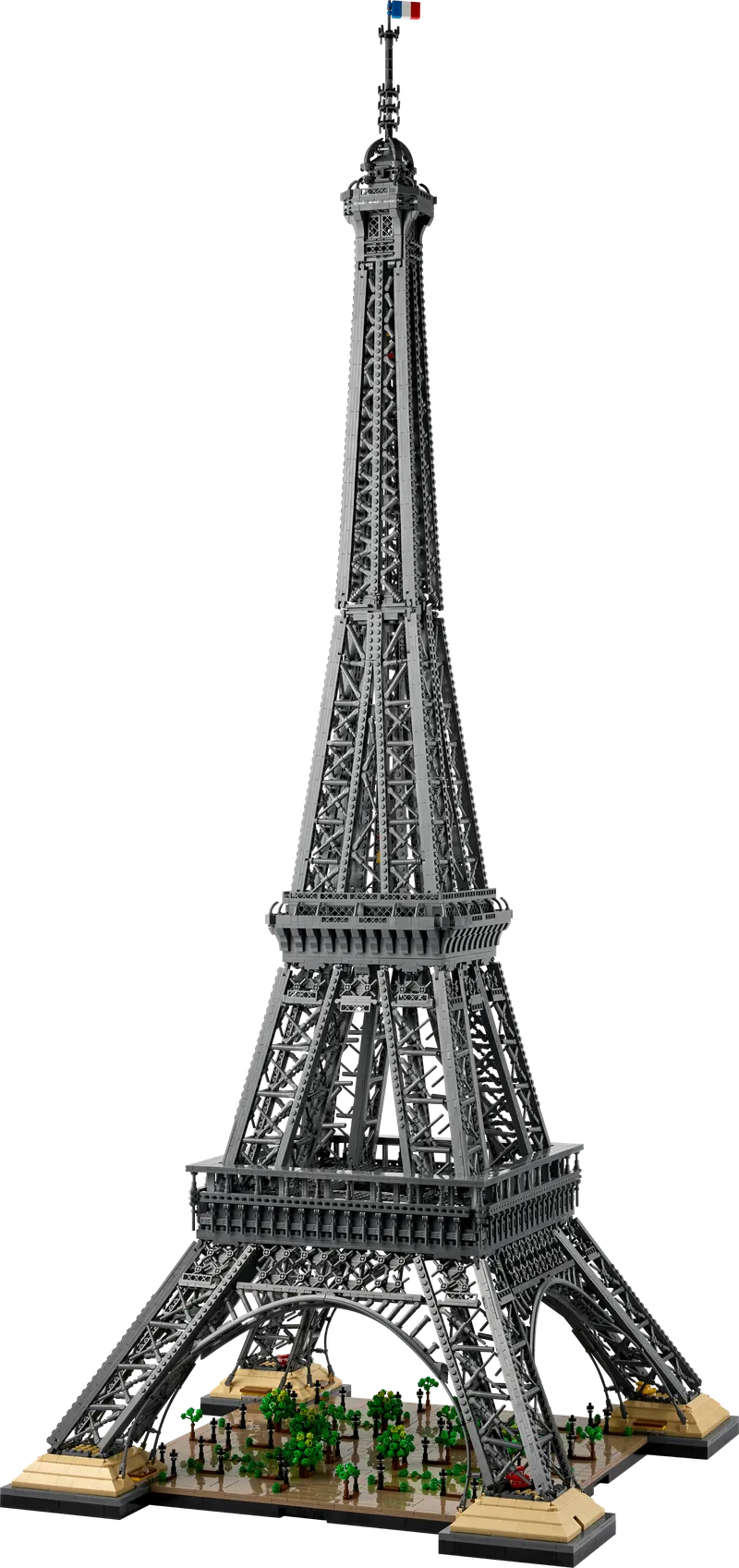
| 10307Eiffel Tower | 10,001 | € 629.99 | ~6.3 cents |
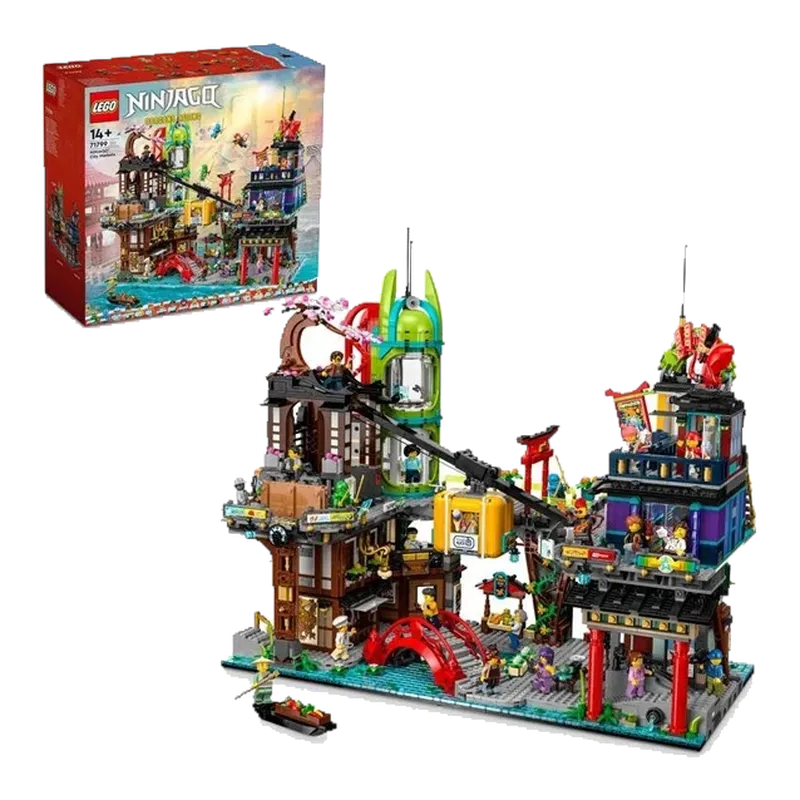
| 71799NINJAGO City Markets | 6,163 | € 369.99 | ~6.0 cents |
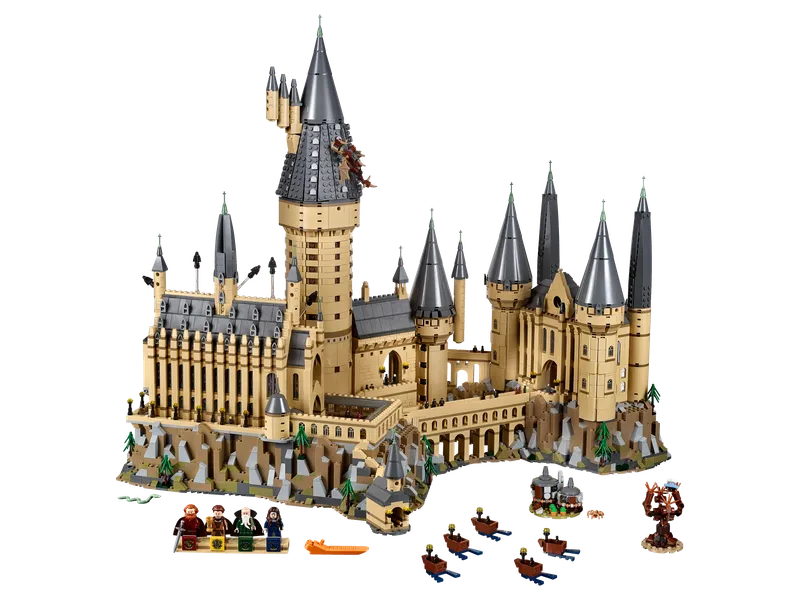
| 71043Hogwarts Castle | 6,020 | € 469.99 | ~7.8 cents |
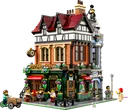
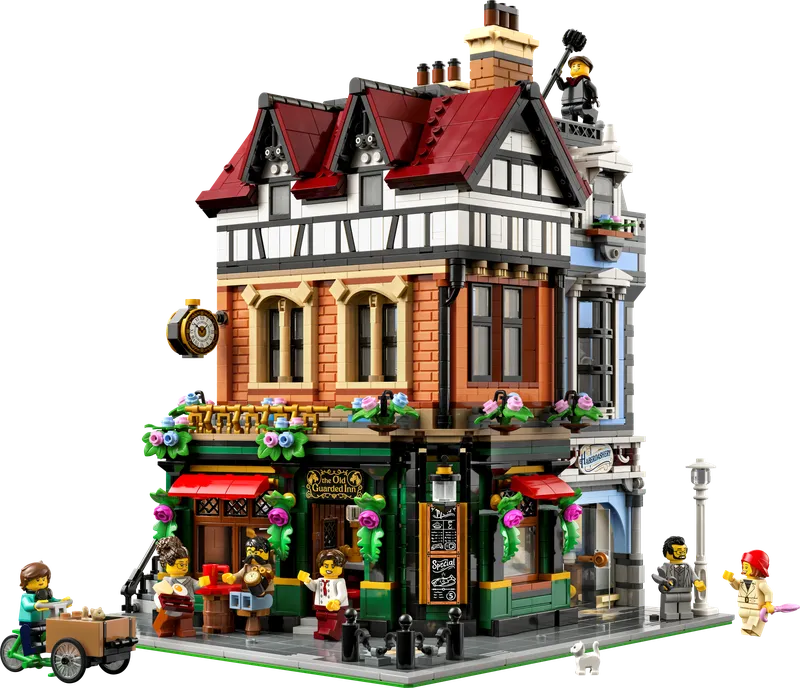
| 10350Tudor Corner | 3,266 | € 229.99 | ~7.0 cents |
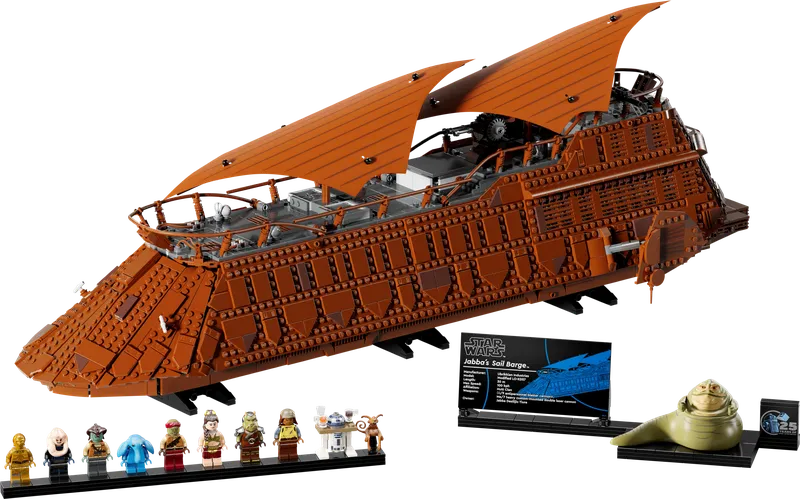
| 75397Jabba’s Sail Barge | 3,943 | € 499.99 | ~12.7 cents |

71799 NINJAGO City Markets has sat near the top of this list for some time and is consistently one of the sharpest large sets in production. Hogwarts Castle and Tudor Corner are the best two in the Modular/Icons segment.
Note: Jabba’s Sail Barge sits at 12.7 cents. That looks high compared to the others, but for a Star Wars set of nearly 4,000 pieces it is actually competitive.
When the ratio says nothing
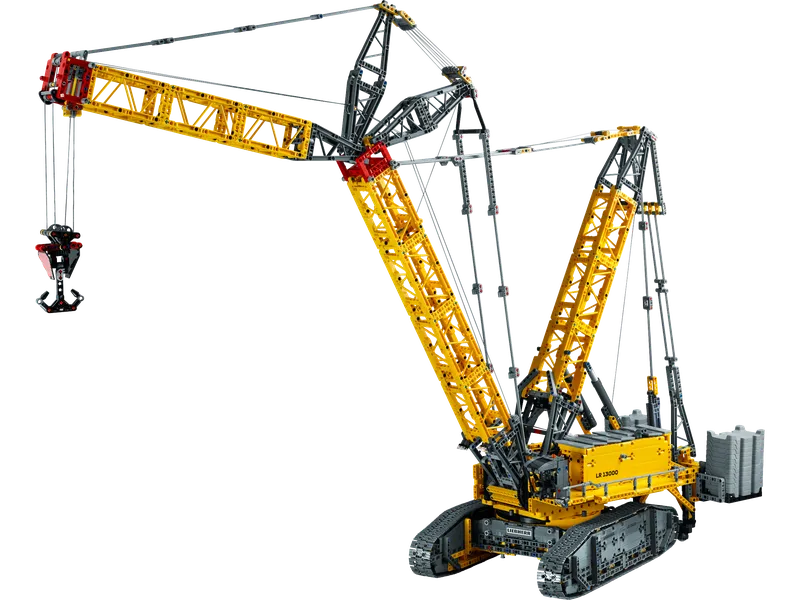
Technic. 42146 Liebherr Crawler Crane has 2,883 pieces for 679 euros, or 23.5 cents per piece, and yet a defensible price. The set contains Powered Up motors, an extendable boom and multiple working functions. You are not buying bricks; you are buying a working mechanism. Comparing piece-per-price with a Hogwarts Castle is pointless.
Battle packs. 75345 501st Clone Troopers Battle Pack has only 119 pieces for 20 euros, or 16.8 cents per piece. Sounds expensive. But the set contains four unique minifigs, and on Bricklink each Clone Trooper minifig sells for 4-6 euros loose. Price per piece tells you nothing here about the value of the set.
Build sculptures. Sets like 43292 Pua (Moana, 885 pieces) are display objects assessed as a whole. One more or fewer piece does not change the display value.
Gifts. Theme fit always beats ratio. A child who loves Star Wars wants a Star Wars set, even if there are NINJAGO sets with more pieces for less money.
When the ratio does work
Use price-per-piece for:
Direct comparisons within one theme. Two Harry Potter sets around 60 euros: at equivalent build value, the one with more pieces is the better buy. This works because licence costs and margins are comparable across the theme.
Black Friday calculations. Calculate the ratio before and after the price drop. A set that drops from 10 cents to 7.5 cents per piece is a better Black Friday deal than one going from 8 cents to 7 cents. The absolute price drop misleads; the improvement in ratio is more concrete.
Budget-shopping on large sets. If you want to spend 100-150 euros on a large build experience and theme is not decisive: take the set with the lowest price-per-piece ratio. NINJAGO City Markets and Hogwarts Castle win almost every time.
How BricksDeal displays this
On set detail pages, BricksDeal shows price per piece alongside the live lowest price and RRP. That calculation updates automatically when a retailer changes their price. If you actively steer on ratio, comparing retailers per set helps: the same set can show different ratios at different shops if not all retailers apply price drops at the same time.
How I actually use the ratio
I rarely use price-per-piece as a decisive criterion. I do use it as a first filter for large sets above 200 euros: if a set costs more than 15 cents per piece in a non-Technic theme, I look for a reason. Is there a licence? Rare minifigs? Unique build mechanism? If there is no reason, the set is probably overpriced for what it delivers.
For the sharpest price-per-piece deals, check the large sets overview on BricksDeal and sort by price. The combination of high piece count and low price stands out immediately.
Sets from this guide
The LEGO sets mentioned in this article, with live price comparison.

Best for each buyer type
The sets from this guide that deliver the sharpest ratio per buyer type.
Around 6 cents per piece — the lowest ratio among large active sets, and consistently the sharpest large set in production for years.

The same sharp ratio as NINJAGO City but with a recognisable icon — easier to justify as a gift for someone who doesn't know NINJAGO.
7.8 cents per piece for a Harry Potter landmark that stays displayable split in two sections — the best ratio in the Modular/Icons segment.
Sits at around 7 cents per piece at RRP — a 10% price drop puts this into best-deal territory for an Icons modular set.