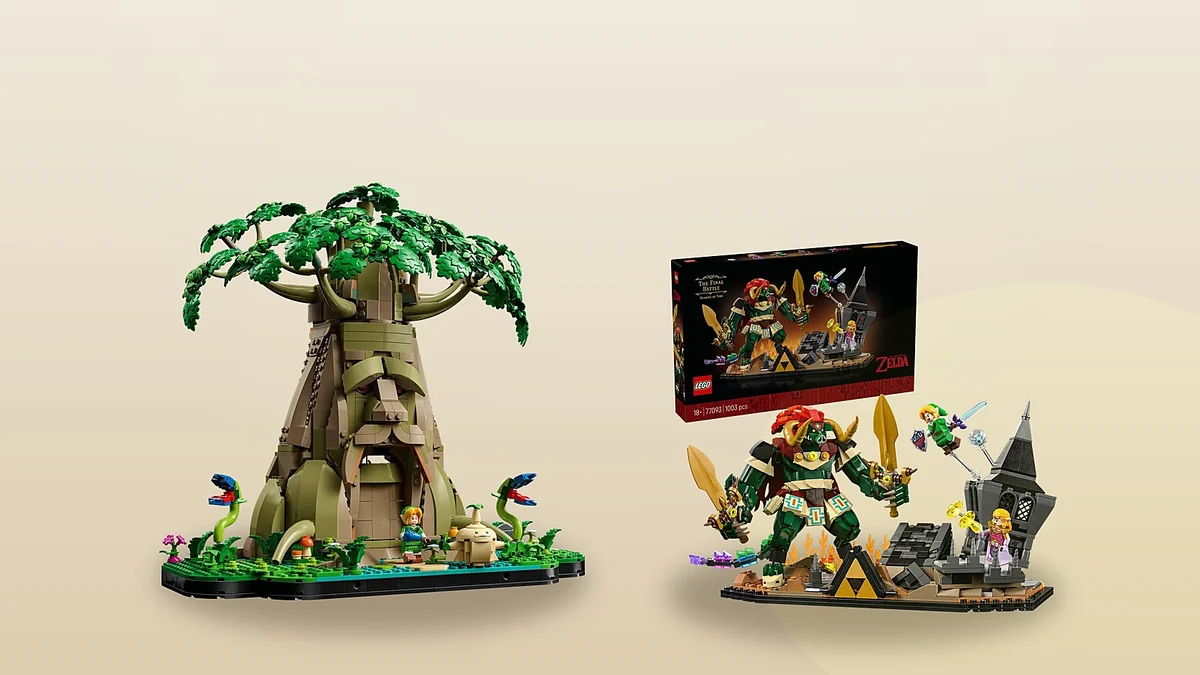
LEGO Zelda is an odd one out among the licensed themes. Where Mario got dozens of sets, the entire Zelda catalogue in June 2026 consists of exactly two boxes: the Great Deku Tree 2-in-1 from 2024 and the fresh Ocarina of Time – The Final Battle from March 2026. Both 18+, both built to be displayed rather than played with.
And the line-up is more likely to shrink than to grow. LEGO has put the Deku Tree on its international farewell list, and our data shows what that means: the discount that once existed has evaporated, the lowest Dutch price is back at RRP level and the number of shops with stock keeps dropping week by week. If you want this set, you are inside the window where you can still buy it new at a normal retail price. After that, a different game starts, with second-hand prices you do not get to set.
For live prices and stock, use the LEGO Zelda theme page. This guide explains what both sets offer, who they are for and how to use the retirement mechanics to your advantage.
Quick pick: which route fits you?
| You want | Best direction | Watch closely |
|---|---|---|
| The big Zelda display | 77092 Great Deku Tree 2-in-1 | Shrinking stock; the price will not drop |
| A more affordable entry point | 77093 Ocarina of Time | Fresh, so expect no discount for now |
| Maximum nostalgia per centimetre | 77093, the final battle of 1998 | More compact than the tree, just as on point |
| Both sets complete | 77092 first, then 77093 | The tree has the deadline, the tower doesn’t |
| The lowest possible price | Price alert on 77093 | With 77092, waiting is the real risk |
The thread running through this guide: in a theme with two sets, the question is not which set is best, but which deadline you need to take seriously. And right now that deadline belongs entirely to the Deku Tree.
The two sets side by side
Because the line-up is this small, we can capture the whole theme in one table. That makes the choice considerably more honest than in broad themes, where you end up comparing apples with polybags.
| Feature | 77092 Great Deku Tree 2-in-1 | 77093 Ocarina of Time – The Final Battle |
|---|---|---|
| Release | 1 September 2024 | 1 March 2026 |
| Pieces | 2,500 | 1,003 |
| Minifigures | 4 (Zelda + three Links) | 3 (Link, Zelda, Ganondorf) + beast Ganon |
| Age rating | 18+ | 18+ |
| RRP | € 299.99 | € 119.99 |
| Current lowest | € 403.09 | € 119.99 |
| Status | Last chance, stock shrinking | Regularly available, fresh |
| Dutch shops | Around ten, falling | A handful, stable |
Two things stand out. First: neither set offers any discount right now, but for completely different reasons. The tower is too new for a discount; the tree’s discount has already been and gone. Second: the price gap between the two is large enough that they rarely compete with each other. If you are considering the tree, you compare it with other large display sets; if you are considering the tower, you compare it with a generous gift.
77092 Great Deku Tree 2-in-1: the flagship on its way out
At 2,500 pieces, the Great Deku Tree is the kind of set LEGO makes only once per licence: large, technical and clearly built for the fan who has been playing the games for decades. The 2-in-1 in the name is not marketing speak. The box contains two full build options of the iconic tree, each rooted in a different era of the series, with its own details, colour mood and accessories. You pick one per build; anyone wanting to switch later largely starts over, and here that is a feature rather than a flaw.
Two trees in one box
The choice between the two versions is more than a colour difference. One build leans on the young, fairy-tale Hyrule where the tree still speaks and the story begins; the other on the later, rougher era where nature has taken over. In practice it comes down to this:
- the versions share the trunk and skeleton, but differ in canopy, dressing and the small vignettes around the base;
- each version has its own story moments in the build, so even the second assembly does not feel like repetition;
- switching is a genuine rebuild of several hours, not a swap of a few panels — so decide up front which version you want to display;
- leftovers from the unused version remain as spare parts, useful for anyone who likes to customise.
For doubters there is a simple rule of thumb: players of the games from the past decade usually pick the young, green version; those who stayed loyal to the older titles will recognise themselves in the second. There is no wrong choice, and the instructions for both stay in the house.
Around it you get four minifigures: Princess Zelda and three different Links, each from a different chapter of the series. For a theme without separate character sets, that instantly makes this the complete Zelda minifigure collection in existence, which makes these figures extra interesting long term — more on that in our guide on the value of LEGO minifigures.
Build and display experience
As a build, this is a long weekend to a week of evenings: a lot of foliage work, repetition that stops just short of tedious, and a canopy that looks surprisingly organic for a tree made of bricks. As a display piece it demands serious shelf space and rewards it with a silhouette that even non-gamers recognise as “that tree with the face”. A few practical display notes from our own build and reader feedback:
- the tree is tall and deep; measure the shelf before the box arrives, because a standard bookcase compartment is a tight fit;
- the model is surprisingly top-heavy — move it with two hands under the base plate, not by the trunk;
- the canopy catches dust, so a spot away from direct sunlight and above eye level saves maintenance and discolouration;
- the minifigures visually disappear into the model; if you want to show them, place them on a small plinth at the front.
The price story is the least romantic part. The RRP is € 299.99, and the current lowest Dutch price is € 403.09 — effectively the same level. Earlier discounts have melted away as shops sell their final copies without restocking. That is the classic end-of-life pattern: first the discount disappears, then the stock, then the normal price.
77093 Ocarina of Time – The Final Battle: fresh and right on time
The second set aims straight at the heart of anyone who sat in front of a Nintendo 64 in 1998. The Final Battle recreates the endgame of Ocarina of Time: the collapsed tower of Hyrule Castle as a ruined backdrop, with Link and Zelda as minifigures, Ganondorf in his human form and the beast Ganon as a brick-built monster dominating the diorama. Those who know the scene do not need to turn the box over; those who do not still see an atmospheric fantasy ruin with a dragon-like beast.
The scene a generation knows
For its target audience, this set does something few LEGO sets manage: it recreates not a vehicle or a building, but a memory. The moment the tower collapses, the music cuts out and Ganon rises from the rubble is, for people in their thirties and forties, one of the most famous final scenes in gaming history. LEGO understood that and staged the diorama as a freeze-frame: the beast at the centre, Link with the Master Sword at the ready, Zelda at a distance, and the ruin framing it all.
That is also what makes the set such a safe gift. You do not need to know which console the recipient owns now or which entry in the series is their favourite; anyone who ever finished Ocarina of Time recognises this tableau at a glance. It is the same reason the set does well with people who own no other LEGO at all.
Build experience and size
At 1,003 pieces, this is a very different format from the tree: two to three evenings of building, a footprint that fits a regular bookshelf and a price point (€ 119.99) that is still defensible as a gift. The build leans on ruin techniques — broken arches, slumped walls, rubble that lies deliberately askew — and the beast Ganon is posable enough to arrange the composition to taste. The diorama has one clear viewing direction, which suits a shelf against the wall better than a free-standing display case.
The set released on 1 March 2026, after a pre-order period since mid January, and is currently carried by a handful of Dutch shops. The current lowest price is € 119.99, equal to RRP, and that will stay that way for a while: fresh 18+ sets in narrow licensed themes are rarely where shops give away their margin. The first price drop is almost certain to come, but it can take months.
Who is each set for?
The Deku Tree is the set for the collector and the builder. If you want one Zelda piece that carries a room, see the 2-in-1 choice as replay value, or want the complete minifigure selection of the theme in one go, this is where you land. It is also the set with the highest threshold: the price point, the build time and the required shelf space all demand commitment. If the profile fits you, also read our broader guide to the best LEGO sets for adults, where display pieces like this sit in context.
The Final Battle is the set for the nostalgic and the gift buyer. The moment it recreates is, for a generation now in their thirties and forties, the final fight of their childhood; the format is manageable and the price point sits within reach of a generous birthday gift. If you are unsure whether the recipient is “into Zelda”: this scene is the safest answer LEGO has ever made. For more options in that corner, LEGO gifts for adults helps.
And if you want both? Then the order matters more than the preference. The tree has a deadline, the tower does not.
Together on one shelf, by the way, the two sets work better than the individual photos suggest. The tree is the tall, green anchor; the tower diorama is lower and darker and reads as a foreground. If you build both, place the tower one shelf lower or at an angle in front of the tree — the minifigure scale is identical, so the two worlds blend visually. It is a small argument in the buying decision, but one worth knowing up front: bought as a duo, this theme furnishes an entire display cabinet.
The minifigures: seven figures, the whole cast
In a theme without polybags, BrickHeadz or playsets, the minifigures are scarcer than the sets themselves. The full LEGO Zelda cast currently consists of seven figures plus one brick-built beast, spread across two boxes:
- In 77092: Princess Zelda and three versions of Link, each from a different era of the series. Three Links in one box is unusually generous for LEGO, and these are the only places where these variants exist.
- In 77093: Link and Zelda in their classic look, Ganondorf as the theme’s only villain minifigure, and the beast Ganon as a built figure.
Why this matters: with retired licensed sets, it is historically often the exclusive figures that carry the second-hand value, even more than the model itself. A Deku Tree without its four figures is considerably less complete on the after-market, and loose copies of exclusive figures regularly develop a price life of their own. How that works, and why you should keep figures neatly in the box or display case, is covered in what LEGO minifigures are worth.
For buyers today, the practical lesson is simpler: whoever wants the complete cast needs both sets, and half of that cast sits in the box that is in the process of disappearing.
How a LEGO retirement works, and why it matters now
When LEGO removes a set from its range, it happens in phases. First the set gets an internal end date and appears on the last-chance list on LEGO.com. Shops stop reordering; whatever is in the channel is all there is. Then the stock dries up, shop by shop, and the sharpest prices disappear first. Anyone who still wants the set after that is left with the second-hand market, where large licensed sets historically often end up above their old RRP — sometimes steeply, sometimes only after years, and sometimes not at all.
How that mechanism works in detail is covered in when does a LEGO set retire?, and what happens to prices afterwards in what retired LEGO sets become worth. The short version for this theme: 77092 is now in phase two. The discount is gone, Dutch stock has shrunk to around ten shops and every copy sold is not coming back.
What this emphatically is not: an invitation to speculate. Buying a set because you expect to resell it at a profit is a gamble with storage costs, and our guide on LEGO as an investment explains why that disappoints more often than the success stories suggest. The retirement status matters mostly to people who want the set itself: it turns “buy someday” into “buy this year”.
Why LEGO Zelda is such a narrow theme
The contrast with the other Nintendo licences is striking. Mario got playsets, expansions and interactive figures; Animal Crossing and Sonic got entire waves for children. Zelda got two 18+ display sets, and that looks like a deliberate choice: the average Zelda player grew up alongside the series, and LEGO treats the theme as Icons material rather than as a toy line.
For buyers, that has three practical consequences. There is no cheap entry point — no polybag, no small set to sample the licence; the entry price is the price of 77093. There is no replacement rhythm — where play themes refresh every year, this one can stay quiet until LEGO announces something new. And the audience buys differently: display sets tend to be bought once and deliberately, so stock drains more evenly and sold-out sets are slower to return.
That also explains why the Deku Tree’s retirement status weighs heavier here than an average “last chance”. In a broad theme, there is always a successor ready to absorb the collector pressure. In Zelda there is no successor; there is only the second set, and it plays a completely different role on the shelf.
Where to buy LEGO Zelda in the Netherlands
The theme has a narrow market presence, so the list is short. Four partners currently have stock on one or both sets:
- Bol.com — usually the fastest delivery and the widest visibility; with 77092, check whether the offer comes from Bol itself or from a third-party seller, because that affects both price and ease of returns.
- Amazon.nl — alternates sharp daily prices with stock shipped from other EU warehouses; delivery times vary more than you may be used to.
- LEGO.com — the most reliable source as long as the sets are listed, sometimes with a free gift set on larger orders. For 77092 the last-chance status explicitly applies here: when LEGO itself sells out, that is usually the beginning of the end everywhere else.
- Proshop — the price fighter of the group, regularly dipping just below the rest with slightly longer delivery times as the trade-off.
Because each shop’s stock consists of separate remaining batches, the picture can change daily. The LEGO Zelda theme page puts the current prices and stock status of all shops side by side; the broader deals overview shows whether a promotion happens to be running.
Buy now or wait?
For 77092 the answer is uncomfortably simple: waiting no longer has an upside. The price sits at RRP level and will not structurally drop again; the only thing still moving is the stock, and it is moving down. If you want the tree, buy from the next shop with a normal price and fast delivery. The only reason to wait is a tight budget, and then the honest advice is: do not count on the set still being available at retail price in six months.
The checklist for the Deku Tree:
- is the lowest price at or below € 299.99? Then the price is fine — it will not get better;
- does the shop deliver from its own stock, with a normal delivery time? Remaining batches via third-party sellers ship slower and are harder to return;
- have you measured the shelf space? A cancelled “maybe not after all” purchase cannot be redone with this set.
For 77093 the opposite applies. There is no scarcity pressure, the set is brand new and the first real discount is almost certain to come — nobody just knows when. Here, patience is free money: set a price alert on the set and you get an automatic message the moment a shop dips below RRP. Only buy sooner if there is a birthday or holiday on the calendar that will not wait.
The checklist for The Final Battle:
- no deadline? Set an alert and wait; every week of patience is potential discount;
- a deadline after all? Compare the four partners on delivery time instead of price — the price is the same everywhere right now anyway;
- see a price above € 119.99? Ignore it. The set is regularly available; a premium has no place here.
If you want both sets, combine the two logics: secure the tree first, then wait on the tower with an alert. That not only saves money, it also prevents the most expensive mistake in this theme — postponing the tree until it only exists second-hand.
Common mistakes in a two-set theme
A narrow catalogue sounds manageable, but that is exactly where we see buyers make the same errors over and over. The four we encounter most:
- Waiting for a discount that is no longer coming. In broad themes patience almost always pays; with a set in its farewell phase the mechanism runs in reverse. The discount on 77092 has already happened. Anyone using the old discount level as their buying threshold will wait until the set is gone.
- Buying above RRP out of panic. As soon as “last chance” starts circulating, sellers appear with inflated prices while regular shops still have normal stock. Check the theme page before paying a scarcity premium: as long as even one shop sits at RRP, any price above it is premature.
- Treating the fresh set like the departing one. The urgency around 77092 rubs off on 77093, but that set is not going anywhere. Rushing the tower simply costs you the first discount that is still to come.
- Buying to resell, without a plan. The retirement logic tempts people into a second box “for later”. That can work out, but honestly work through our guide on LEGO as an investment before putting savings into unopened boxes.
The common denominator: scarcity is information, not a buy button. Use it to set your timing, not to stretch your budget.
How to read the price chart for these sets
The set pages on BricksDeal show a price history for both sets, and in this theme of all themes, that chart tells the whole story at a glance.
For 77092 you can see the pattern this guide describes: a long stretch around RRP after release, then a phase where shops undercut each other and the lowest price visibly dropped, and since the last-chance status a line creeping back up to RRP level. That returning line is the signal that the discount phase is definitively over — once the chart moves like that on a departing set, it almost never comes back down.
For 77093 the chart is still flat: a straight line at RRP since March. Boring to look at, but useful: against such a flat history, any dip — however small — is immediately meaningful. That is exactly the moment a price alert fires, and why you want to set one now rather than “when you remember to”.
Sources and method
This guide was editorially checked on 12 June 2026. Set data (piece counts, minifigures, release dates and age ratings) comes from the BricksDeal database, supplemented with LEGO’s official product information. The retirement status of 77092 is based on LEGO’s own international last-chance listing. Current lowest prices, RRPs and retailer availability come from BricksDeal’s live price data, which tracks Dutch shops daily via the LEGO Zelda theme page.
Prices and stock move daily; the live tokens in this guide always show the current state. No shop or manufacturer has any influence on the content or order of this guide. Other notable releases in 2026 are tracked in the best LEGO sets of 2026.
Best route on BricksDeal
- Decide on your goal first: the big display (77092), the nostalgic scene (77093) or both.
- Open the LEGO Zelda theme page for current prices and stock per shop.
- Want the Deku Tree: buy from a shop with a normal price and stock, and do not postpone.
- Want the Ocarina of Time set without urgency: set a price alert and wait for the first drop.
- Never pay above RRP while a set is still regularly available; check the theme page before accepting a “scarcity price”.
Two sets, two eras
This is the entire LEGO Zelda catalogue as of June 2026: a departing flagship and a fresh final-boss scene. That is all there is, which is exactly why timing matters more here than in any broad theme.
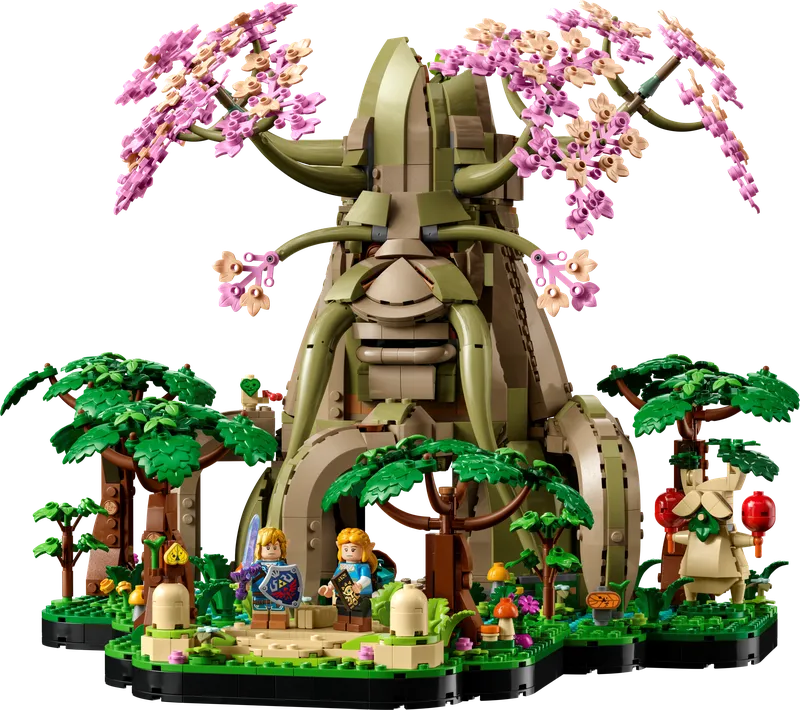
The 2024 flagship with two build options in one box. LEGO has put the set on its farewell list; the lowest price is back at RRP level (€ 299.99).
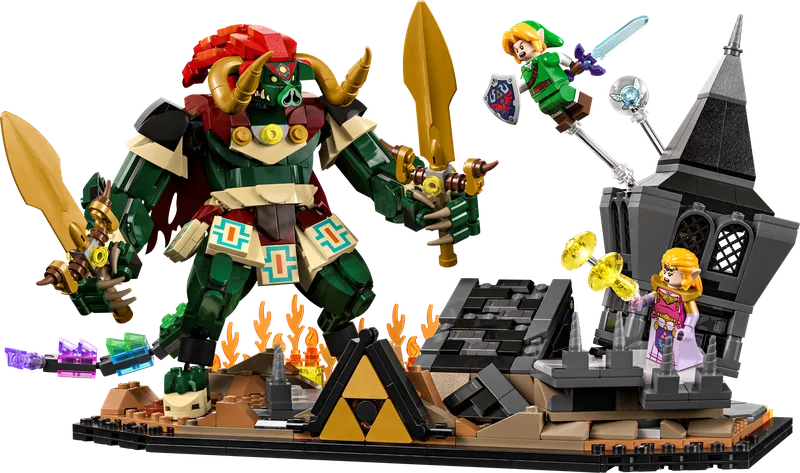
New since March 2026: the final battle from Ocarina of Time as a diorama. Still at RRP everywhere (€ 119.99), typical for a fresh 18+ set.